Is your plumbing bid fair?
Sump Pump Installation Cost in 2026: The Backup Is the Real Decision
Chuck Thompson is a retired homebuilder and contractor who owned L.C. Thompson Construction in Jefferson City, Missouri. TheFatBook Cost Index V3 2026 (built from BLS wage and Craftsman labor data) referenced throughout this article is our proprietary dataset that powers all of our calculators and bid-fairness checkers. Full details are on the methodology tab.
A sump pump installation cost averages $1,126, with most jobs landing between $1,051 and $1,206, per our index. That is a tight band, and it covers a real install: a pump in the pit, a check valve, and a discharge line that carries water away from the house. The number is clean and the number is honest.
It is also the wrong number to fixate on. That $1,126 buys the primary pump, the one wired to household power, and the primary pump is the part that fails at the exact moment you need it most. Hold that thought against the rest of this guide, because every dollar figure here describes the half of the system that goes dark in a storm.
Where $1,126 Goes
| Component | Cost | Share |
|---|---|---|
| Pump and materials | $425 | 37.8% |
| Labor (4.5 crew-hours) | $237 | 21.1% |
| Permit | $87 | 7.7% |
| Overhead | $169 | 15% |
| Contractor margin | $198 | 17.6% |
| Total | $1,126 | 100% |
The pump and materials line is doing the most work here. It covers the pump itself, the basin or pit work, the check valve, and the discharge piping, all bundled into one $425 figure. Labor runs on a plumber's base wage of about $34.70 per hour, carried at $47.47 loaded once you fold in the cost of employing someone. The crew books about 4.5 hours, more than a simple swap, because pit and discharge work takes longer than dropping in a replacement unit. The permit shows as a standard $87 allowance, and your city sets the real fee. Read the whole table as one thing: the primary pump, on house power, and nothing more.
The Pump Runs When the Power Does Not
Check your bid Compare your contractor estimate against TheFatBook city pricing, markup, and lowest realistic price data. Run the Bid Checker →
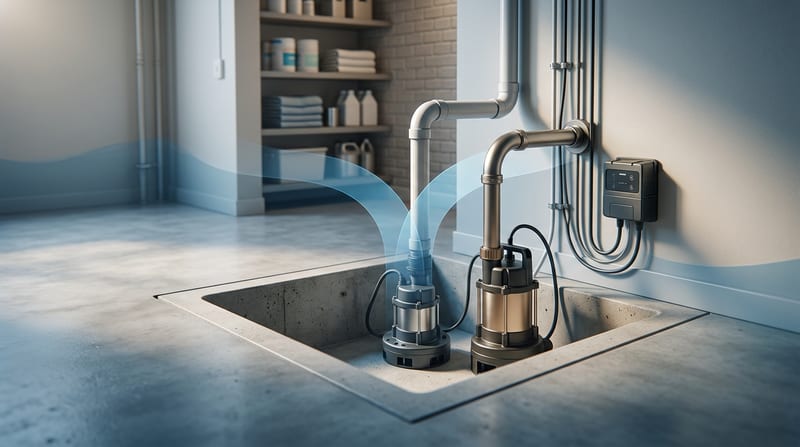
A primary sump pump runs on household electricity. That is its single point of failure, and it is not a small one. The heaviest rain, the kind that fills a sump fast and tests every seam in the basement, rides the same storms that drop trees on lines and knock the power out across a neighborhood. So the moment the basin fills fastest is often the exact moment the primary pump has no electricity to run. The pit climbs, the float rises, and nothing happens.
The trade-off is plain. Where the primary-only system wins is upfront cost. It is the cheapest way to put a working pump in the hole, and on a dry day it does the job. Where it falls apart is the storm-plus-outage, and that pairing is not some rare edge case you can wave off. It is the scenario you bought the pump for. A pump that runs in every condition except the storm is a pump that runs in every condition except the one that matters, which is why the real decision is the backup, not the brand of the primary.
What a Backup Actually Costs You to Skip
A battery backup pump or a water-powered backup adds to the $1,126, and that added line is the number people balk at on the bid. It looks like an upsell. Set it against what a flooded basement actually costs and the math turns over. A soaked basement is ruined flooring, swollen drywall, fouled mechanicals, and whatever you had stored down there, plus the cleanup crew and the days you lose to it.
A backup pump keeps moving water when the grid is down, which is the only scenario that decides whether the system worked. The cost of adding it shows up once, on the bill. The cost of skipping it shows up on the worst night of the year. A few hundred more today, paid once, against a five-figure soaked basement that arrives on the worst night of the year. The two numbers are not close, and they are not meant to be. One is a known, small, upfront cost. The other is the open-ended bill you are choosing to risk every time the lights flicker.
Chuck's Take: Folks always want to talk pump brands, and the brand barely matters. What counts is what happens when the storm takes the power, because that is the night the pit fills and the primary just sits there dead. A battery or water backup is the cheapest insurance in the whole house, and skipping it is the one corner I would never tell anybody to cut. Leonard "Chuck" Thompson, LC Thompson Construction Co.
What Changes City to City
| Metro | Average | Range | Crew labor |
|---|---|---|---|
| Austin | $1,039 | $965 to $1,119 | $207 |
| Denver | $1,116 | $1,035 to $1,204 | $237 |
| Atlanta | $1,125 | $1,059 to $1,197 | $195 |
| Phoenix | $1,212 | $1,135 to $1,294 | $233 |
| Chicago | $1,398 | $1,306 to $1,497 | $379 |
Austin to Chicago is a $286 gap, about 26% on the same install. Crew labor explains $138 of it, the difference between a $161 line in Austin and a $299 line in Chicago. The rest is the company: overhead, margin, and what it costs to run a plumbing outfit in that market. The cities with the most basements and the hardest freeze-thaw, the northern markets, are also the ones where the price runs highest. Need and cost track together here, which is its own kind of fair.
How to Read a Sump Pump Bid
A primary-only install should land inside the index range, somewhere near that $1,051 to $1,206 band once you adjust for your metro. The first question to ask is whether the quote includes a backup at all, and if so, what kind, battery or water-powered. A bid that quotes only the primary is quoting half the protection, even if the price looks fair on its own. Then ask about the check valve and where the discharge sends water, because it needs to go well away from the foundation, not into a puddle that drains back to where it started. Grade the whole thing against the plumbing bid checker before you sign.
Frequently Asked Questions
How much does sump pump installation cost?
A sump pump installation averages $1,126 for a primary pump, and that covers the pump itself, the pit, the check valve, and the discharge line out. A battery or water-powered backup adds to that figure, and it is the part of the system worth not skipping, since it is what runs when the power is out.
Do I need a backup sump pump?
If the pump protects anything you would hate to lose, yes. A battery backup runs off a stored charge when house power drops, and a water-powered backup uses your home's water pressure instead of electricity, so it keeps pumping with no battery to maintain. Each buys you the one thing the primary cannot give you during an outage: a pump that still runs.
Do I need a permit to install a sump pump?
It varies by city. A sump tied to a drain or a discharge line can count as permitted plumbing work, and our index carries a small standard allowance for it. Check your city's fee schedule, because the discharge point and any connection to the sewer are what tend to trigger review, and that is where the real cost and the paperwork show up.
Figures are the national project basis from TheFatBook Cost Index V3 2026 for a primary sump pump installation; metro rows reflect local wages and operating costs. Sources: Craftsman National Estimator BOM, BLS OES wages, verified permit fees.