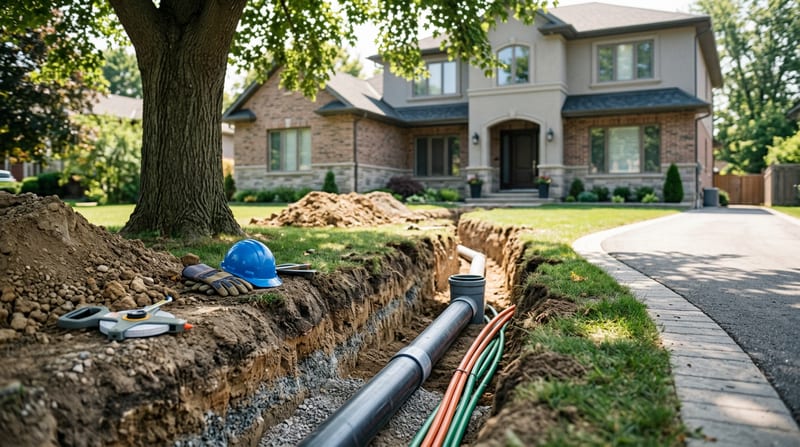
Sewer Line Repair: 2026 Costs and Options
Sewer Line Repair Costs You'll Actually See in 2026
A sewer line repair typically runs $50 to $250 per linear foot for traditional excavation and $60 to $300 per foot for trenchless methods like pipe bursting or CIPP lining. But the method is only half the equation. Total cost depends on depth, pipe material, surface restoration, and where you live. Homes with aging clay-joint laterals or deteriorating Orangeburg pipe face the highest risk of full replacement, which can push a 50-foot run to $4,800 to $12,400 depending on approach. Sewer backups are typically excluded under a standard homeowners policy unless you have a separate endorsement, so these costs could fall entirely on you. Always check your policy details before assuming coverage.
Understanding the repair method matters before you anchor on any dollar figure. A shallow, accessible break in an open yard might cost $3,000 with traditional excavation. A deep line under a concrete driveway requiring trenchless pipe bursting could run $10,000+. The sections below break down exactly what drives those numbers.
Your contractor's hourly rate sets the labor baseline. The national average for a licensed residential plumber sits between $75 and $150 per hour during regular business hours; a master plumber typically commands $100 to $200 per hour. Those rates jump for emergencies, often hitting $150 to $300 per hour. You'll also pay a trip or service call fee, usually between $50 and $150. Geography creates huge swings. Rates in the Northeast and West Coast run 15-40% above national averages, whereas the South and Midwest can be 5-20% below. It took me twenty years of hiring subcontractors, but I've learned the hard way that the advertised hourly rate is almost meaningless without knowing the trip fee, minimum charge, and how the shop prices parts. That goes double for electricians and plumbers.
To see how a full quote stacks up against our cost index for your market, run it through the True Cost Calculator.
How to get a fair quote for your specific job
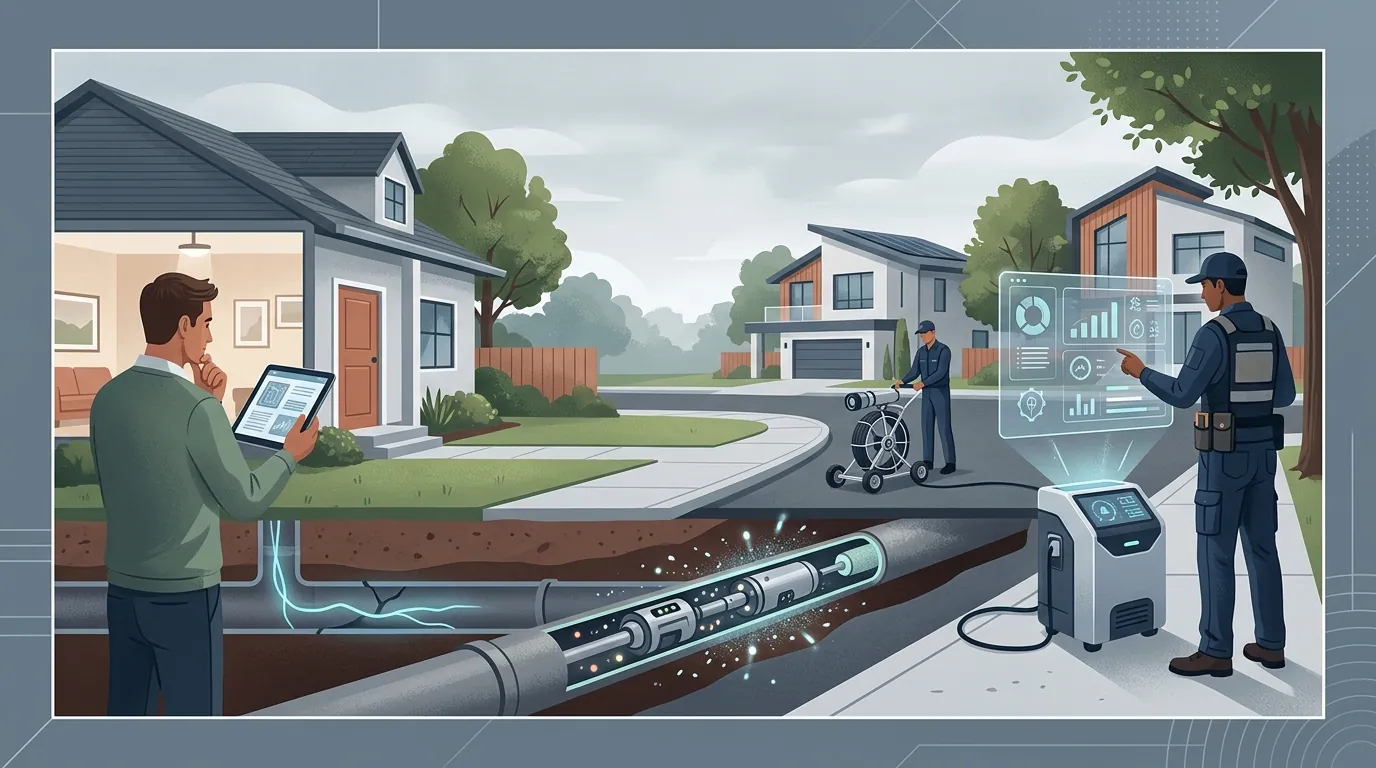
What separates a legitimate bid from a guess written on a napkin? The difference is in the details a contractor worth dealing with is willing to put in writing before you sign. Not just a number either, everything broken out. It should look like that build sheet you get when you buy a new car. (Only not that long. At least you better pray it isn't)
Demand a camera inspection first. Any quote for sewer line repair that doesn't start with a video scope is an estimate based on hope. A proper inspection, typically costing $230 to $845, identifies the exact problem, be it roots, a belly, or a break. OSHA requires contractors to determine the estimated location of underground utilities before opening an excavation, which is a real scope item for these quotes. Get the footage and a written defect summary.
Insist on a line-item written estimate. A single total number is useless. The quote must break down method (traditional dig vs. trenchless), pipe material, length, labor, and permit fees. Ask if restoration for concrete or landscaping is included. For cleaning blockages, check our hydro jetting cost guide to gauge if a contractor's cleaning quote is in the right ballpark.
Verify the license and permit responsibility. A contractor who pressures you to decide immediately or avoids pulling permits is a major red flag. A proper permit and inspection exist to catch exactly the blockages and line breaks that cause sewer backups, which is why local plumbing codes require them for lateral work. The quote must state who pulls the permit and pays for it. Unpermitted work can void your homeowner's insurance.
Cost breakdown: labor, materials, markup, and permit reality
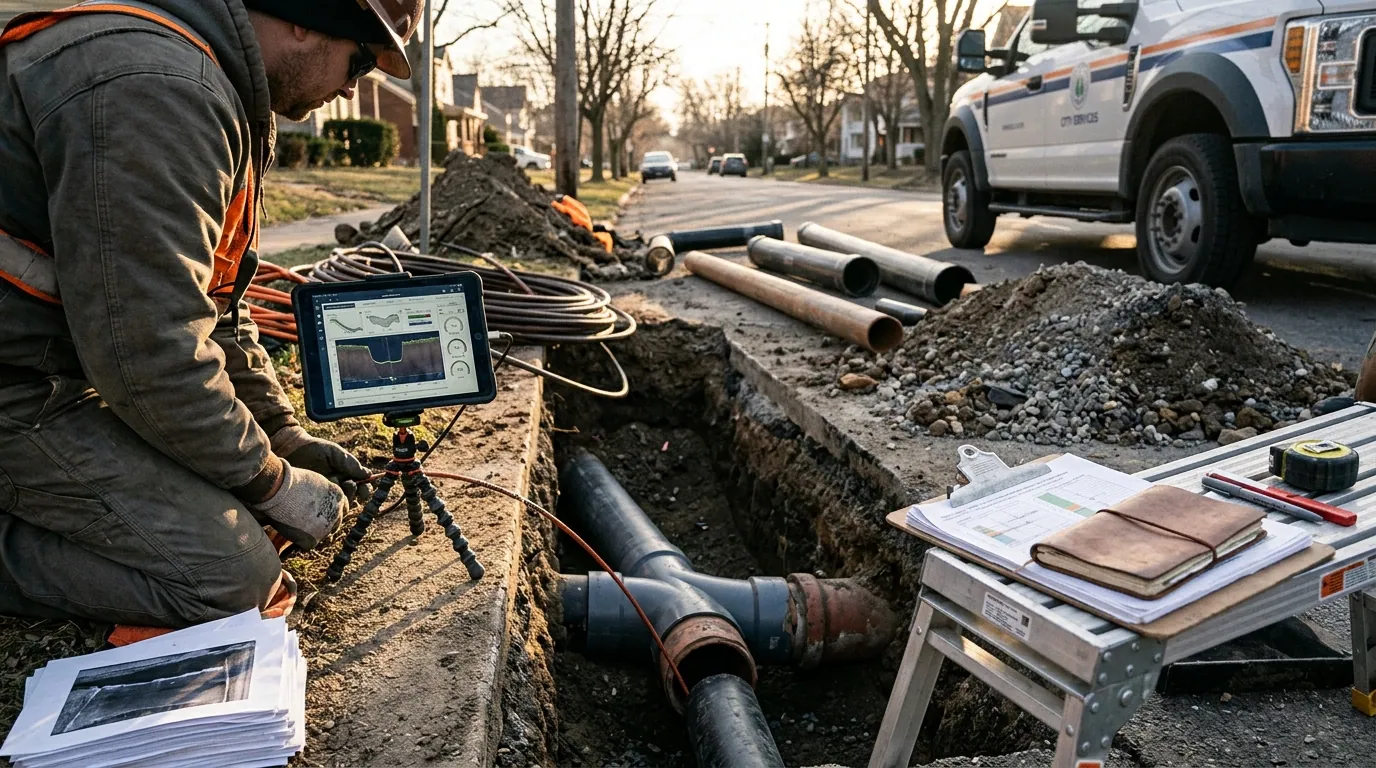
FTC guidance says a written home-repair estimate should spell out scope, materials, completion date, and price. You need that separation to see where your money actually goes. The standard contractor markup on materials runs 10-15%, but aggressive firms push 20-25%. Anything above that demands a detailed justification.
Labor is your biggest variable. A licensed plumber's hourly rate, as we've covered, ranges from $75 to $200 depending on skill and region. That cost is largely fixed. The real flexibility is in material selection and markup. For a sewer line repair, the pipe material itself matters. Charlotte Pipe says PVC DWV pipe and fittings are suitable for sewage drainage and venting applications, which helps distinguish standard sewer-DWV material from trenchless pull-in materials. Choosing standard PVC over specialty liner materials can save hundreds on a long run.
| Municipal Tier | Typical Permit Fee Range | Key Decision Driver |
|---|---|---|
| Low Cost / Rural | $75-$200 | Simple over-the-counter approvals for like-for-like replacements. |
| Average Suburban | $200-$500 | Requires plan review and one inspection for moderate scope changes. |
| High-Cost / Urban | $500-$2,000+ | Multiple inspections, complex zoning reviews, and higher base fees. |
When repairs cost more: safety rules, diagnostics, and trenchless vs dig
A sewer line fails under your mature oak tree and concrete driveway. Suddenly, the repair method you pick decides everything, five figures to restore your property, or just to fix the pipe. That is not a preference call. Dig depth, OSHA rules, and the restoration bill decide it.
OSHA Trench Safety: Federal rules kick in once you dig deep. OSHA mandates protective systems for trenches 5 feet or deeper, unless you're entirely in stable rock. That's not a suggestion, it's why deep open-trench bids climb so fast. A 6-foot dig requires shoring and shielding. Sloping adds its own equipment costs and time. A shallow 3-foot repair through an open backyard? Traditional excavation might be possible, and it would certainly be more affordable.
The Restoration Math: Here's the real math that gets missed. Traditional excavation covers the plumbing alone. But that quote rarely includes the $1,000 to $5,000+ to fix your driveway, landscaping, and hardscape afterward. Trenchless methods like pipe bursting or CIPP lining typically require only two small access pits. Trenchless sewer replacement methods avoid extensive excavation and require less restoration than traditional dig-and-replace work. So a $9,000 trenchless job often beats a $7,000 excavation quote once you add $4,000 in concrete and sod repair. Have your contractor run it for you both ways. If he can't then he can't have your bank card either.
Field guide to choosing a repair path that saves money later
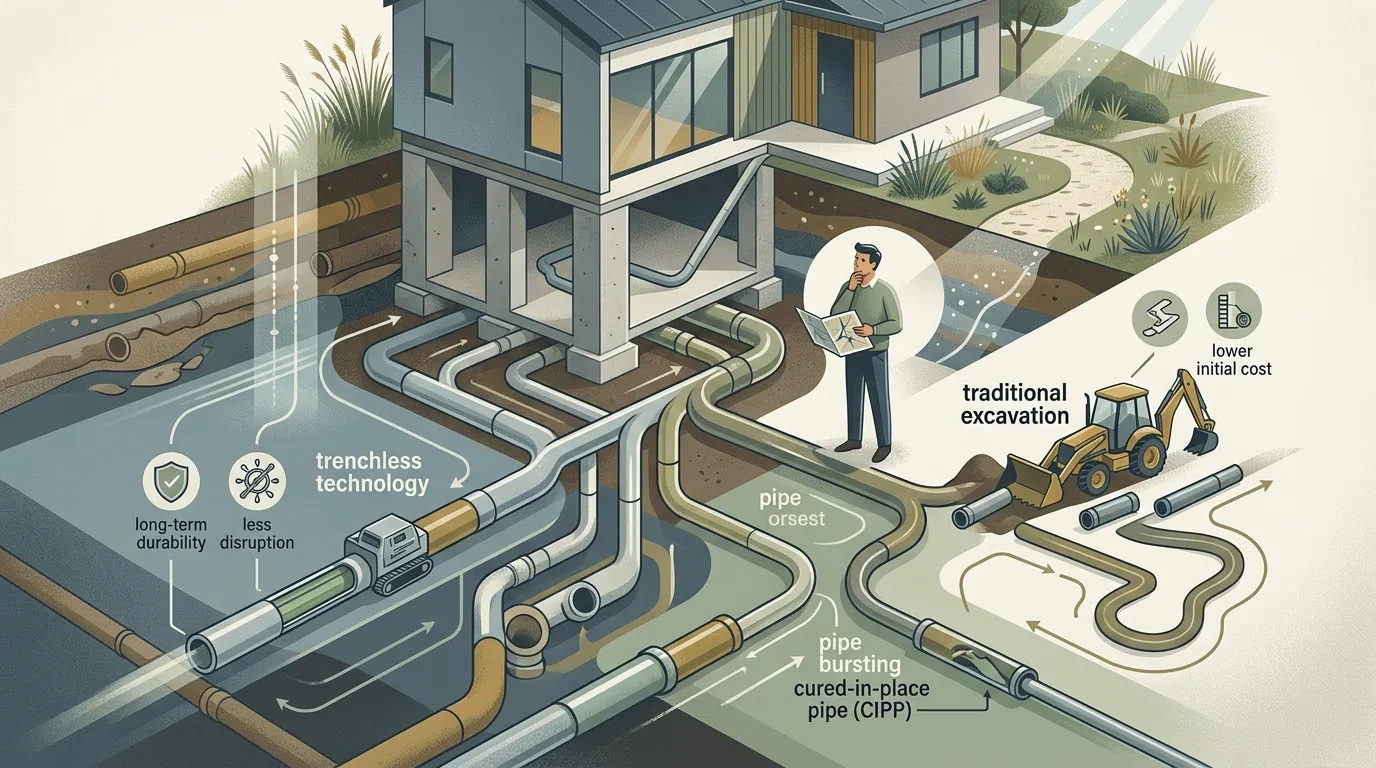
What specific decisions during a repair actually prevent bigger bills down the road? The cheapest quote upfront is not the test. The test is the line items, where scope creep and hidden liability like to sit.
Permit Scope Definition: Vague permit language is a liability. Jurisdictions split sewer-lateral work between private-property permits and right-of-way permits. Your quote must state exactly where the repair starts and ends relative to property lines. Ambiguous scope means you're paying for a second permit and inspection later when the city questions the work boundary. Full stop.
Pipe Material Longevity Tradeoffs: SDR-35 PVC is the workhorse for traditional replacements, affordable and rated for 50+ years in most soil conditions. CIPP liners offer similar longevity but depend heavily on proper installation and resin cure. If your contractor proposes a liner, ask for the manufacturer's warranty term and whether it covers joint failures. Choosing a cheaper material that fails in 15 years isn't a savings.
Cleanout Access Planning: If your property doesn't have a two-way cleanout at the property line, add one during the repair. The incremental cost is $200 to $500 while the line is already open. Retrofitting one later as a standalone job runs $800 to $2,000. A cleanout also makes future camera inspections and hydro jetting possible without pulling a toilet.
Warranty Terms Comparison: Insist every bid specify warranty duration and what it covers: labor only, materials only, or both. A 1-year labor warranty is standard; anything less is a red flag. Trenchless contractors increasingly offer 10-year or even lifetime structural warranties on CIPP liners. Get it in writing with the manufacturer's name attached.
Getting three quotes is standard advice. It's also incomplete if you don't know how to compare them. I once had a client learn this in Jefferson City after a sewer line collapse. The first quote was $14,000 for traditional excavation. The second was $11,500 for trenchless pipe bursting. The numbers seemed straightforward until we broke them down.
The excavation quote included $7,000 for the plumbing work and $7,000 for restoring a poured concrete sidewalk and mature landscaping. The trenchless quote was all-in. Pipe bursting is particularly valuable in urban settings because it causes fewer impacts that disrupt homeowners, businesses, and traffic. That reduced surface damage is where the real savings hide. The final bill for the trenchless method was $11,500. The excavation project, after concrete and sod repair, would have landed at fourteen grand.
What to ask before you sign: The total cost is negotiable. These 5 things shouldn't be.
Before you sign, force every contractor to answer these points on paper.
- Is the quote a fixed price or an hourly estimate? A fixed price protects you from scope creep once the ground is open.
- Does it include permit fees?
- Who is the applicant of record? You want their license on the line, not your hide.
- What is the exact restoration scope? "Sewer repair and surface restoration" is vague. "Replace 300 sq ft of sod and repour 50 sq ft of 4-inch concrete" is specific.
- Finally, ask for the material brands and pipe specifications. A quote for "sewer line repair" that doesn't specify SDR-35 PVC or CIPP liner thickness is a guess, an amateur, or a scam.
The lowest number often isn't the lowest cost. Your checklist should expose the buried line items. Just because your sewer lines are broke doesn't mean you have to be also.
Sources
Labor-hour and wage inputs: Bureau of Labor Statistics Occupational Employment and Wage Statistics, https://www.bls.gov/oes/. Material price trends: FRED producer price indexes, https://fred.stlouisfed.org/. Excavation safety scope: OSHA, https://www.osha.gov/. Full FatBook methodology: https://thefatbook.com/plumbing/methodology/.