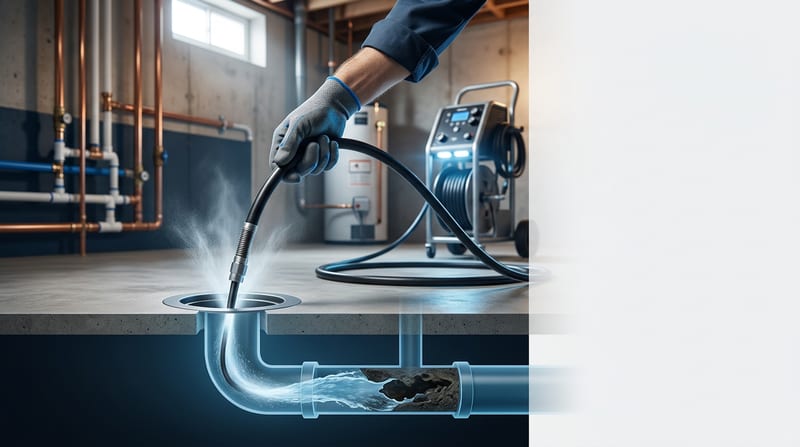
Hydro jetting isn't your standard drain clean. It's the aggressive option, the one you call when snaking fails or when someone sold you on "wall to wall cleaning action" without explaining what that means for your pipes and your wallet. I'll break down what this service actually does, what drives the cost, and the specific points where homeowners get taken. Most of the anxiety I see in forums boils down to one thing: is this an upsell or a real fix?
Why Hydro Jetting Works for Clogged Drains (and When It Does Not)
Hydro jetting scours the inside of a pipe with high-pressure water, typically up to 4,000 PSI. A specialized hose with a jetting nozzle gets fed into the line. Water shoots forward to cut through blockages and backward to flush debris out. This is a full interior cleaning, not just poking a hole through the clog. Think of it as pressure-washing your plumbing. RIDGID's KJ-3100 unit, for example, operates at 3,000 psi and handles 2-inch to 10-inch lines. That spec tells you it's heavy equipment for serious blockages, not a fix for a slow bathroom sink.
So is it worth it, or just an expensive upsell? A competent plumber won't recommend jetting as a first move for a simple kitchen drain clog. He'll snake it first. Jetting comes into play for recurring blockages, heavy grease buildup in restaurant lines, or root intrusion in a sewer lateral. If someone quotes you for jetting without putting a camera in the line first, that's a red flag.
It is better to determine the condition of the drain using a SeeSnake camera before any work starts.
That's from RIDGID's own guidance. Makes sense, you need to see what you're dealing with.
What hydro jetting actually does inside the pipe
The nozzle directs water in multiple directions. A forward jet cuts through the obstruction. Rear-facing jets propel the hose through the line and scour the pipe walls as it retreats. This dual action pulls loosened scale, grease, and root fragments back toward the city main. It restores the pipe's original diameter, something a cable tool rarely accomplishes. The process works on cast iron, clay, and PVC, though pressure settings must be carefully adjusted for older, brittle materials.
The clog type that jetting handles best
Jetting dominates on soft blockages and buildup, grease, soap scum, sludge, that a cable just pokes through. It's also the standard for cutting back minor root infiltration. A standard sectional cable machine like the RIDGID K-50 handles 1-1/4 inch to 4 inch lines up to 100 feet. Good for pulling out solid obstructions. But it doesn't clean the pipe walls. If your line is narrowed by years of accumulation, snaking gives you a temporary path. Jetting gives you back the full pipe.
Hydro Jetting Equipment Specs That Drive the Quote
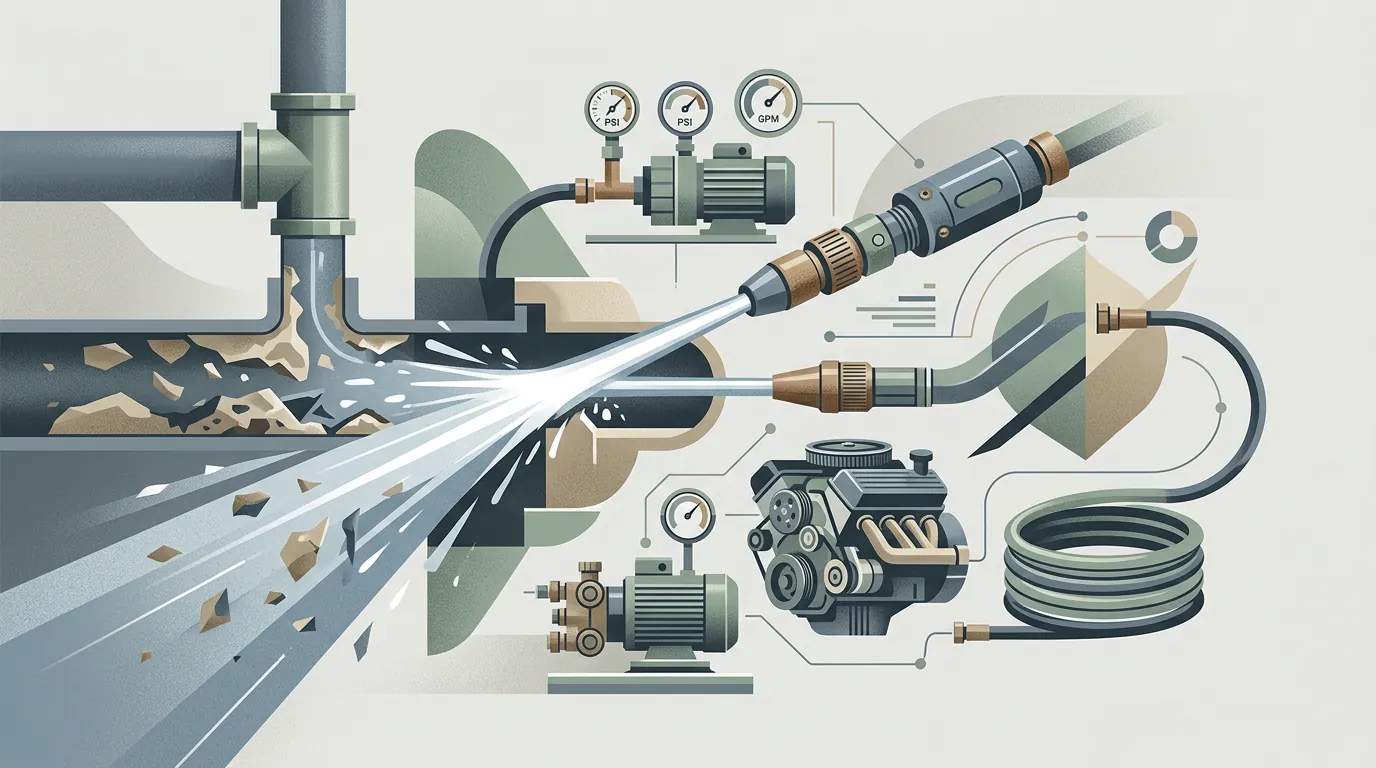
Your typical residential jetter runs at 3,000 to 4,000 psi. General Pipe Cleaners lists a common spec as 3,000 psi paired with a 5.5 gpm triplex pump. That combination is what separates a professional unit from a consumer pressure washer. It's also what makes the job dangerous and the pricing specific to the equipment involved.
Two numbers really define the job: pressure (psi) and flow rate (gpm). Pressure breaks the clog apart. Flow carries the debris out of the line. You need enough of both. A unit with high pressure but low flow will cut the blockage but leave sludge sitting in the pipe. Too much flow in a small line can cause backup into the house. The tech matches the nozzle and settings to your pipe diameter and the blockage type. That setup time, and the cost of the machine itself, is baked into your quote.
Pressure and flow: the two numbers that change results
Higher pressure isn't always better. In a fragile, 60-year-old clay sewer line, running 4,000 psi can damage the pipe or its joints. A good operator knows to dial it back. The WaterJet Technology Association warns that all fluid injection injuries have the potential to be severe. This isn't a tool for a handyman who rented a unit for the weekend. It's specialized, dangerous equipment that demands respect and training.
Line size and distance: why hose reach matters
Your quote scales with time. A short, 30-foot run from a cleanout to a bathroom group is a quick job. A 100-plus-foot run from the house to the city tap in the street takes more hose, more water, and more labor. The diameter also matters. A 4-inch main line cleans faster than a 2-inch kitchen line with three decades of grease. Distance and access points are the primary cost drivers, so they swing the quote more than the machine time.
Jetting versus cable: matching the tool to the job
Don't pay for jetting when snaking will solve it. A cable machine clears a solid blockage, like a toy or a collapsed section, cheaper and faster. Jetting is for cleaning and prevention. If you have roots, the cable cuts a hole. Jetting cuts the roots and flushes the debris. For a one-time clog in a newer home, snaking is the right call. For chronic issues or before lining a pipe, jetting is the standard. The right contractor will explain why he's choosing one over the other. If he can't, find another contractor.
How a Hydro Jetting Bid Breaks Down
What exactly are you paying for on a hydro jetting invoice? Most bids break down into three core parts: diagnostic time with a camera, the jetting labor itself, and cleanup or disposal fees. The Federal Trade Commission states that a written estimate should include a description of the work, materials, a completion date, and the price. If your estimate just says "drain cleaning," it's not a real estimate.
Typical Bid Components
| Component | What It Covers | Why It's Separately Itemized |
|---|---|---|
| Camera Inspection | Locating the blockage, assessing pipe condition. | The diagnostic determines if jetting is even safe and effective. |
| Jetting Labor | Time on site with the jetter unit, per hour or flat rate. | Equipment cost and operator skill are the main expenses. |
| Cleanup / Flush | Removing debris from the area, final camera pass. | Proof of work and ensures the line is clear post service. |
Typical bid components: diagnostic, jetting time, and cleanup
That camera inspection isn't optional. RIDGID notes its systems allow for simultaneous pipe inspection during other operations, so a skilled technician can use the camera to guide the jetter nozzle directly to the problem. Without that diagnostic, you're paying for guesswork. Some companies fold the initial camera pass into the service call fee. Others charge separately. Either way, demand to see the footage before and after.
A small job versus a long run: how the price grows
A straightforward, accessible cleanout with a short run to the blockage might just be a minimum service call. But add 80 feet of line, two turns, and a need to pull a toilet for access? The labor doubles. The job grows with the obstacles. If your cleanout is buried under landscaping or the line runs under a driveway, access time adds cost. That's not an upsell. That's physics and labor.
Inspection proof: why cameras belong before jetting
This is where you separate the pros from the hacks. The final step should always be a post-jetting camera inspection. You pay for proof the line is clear. The footage documents the pipe's condition, shows any remaining concerns like a crack or offset joint, and gives you a baseline for the future. Without that video, you have only a verbal assurance that the $800 job worked. Not good enough.
Safety, Permits, and Code Items That Can Add Time to Your Project
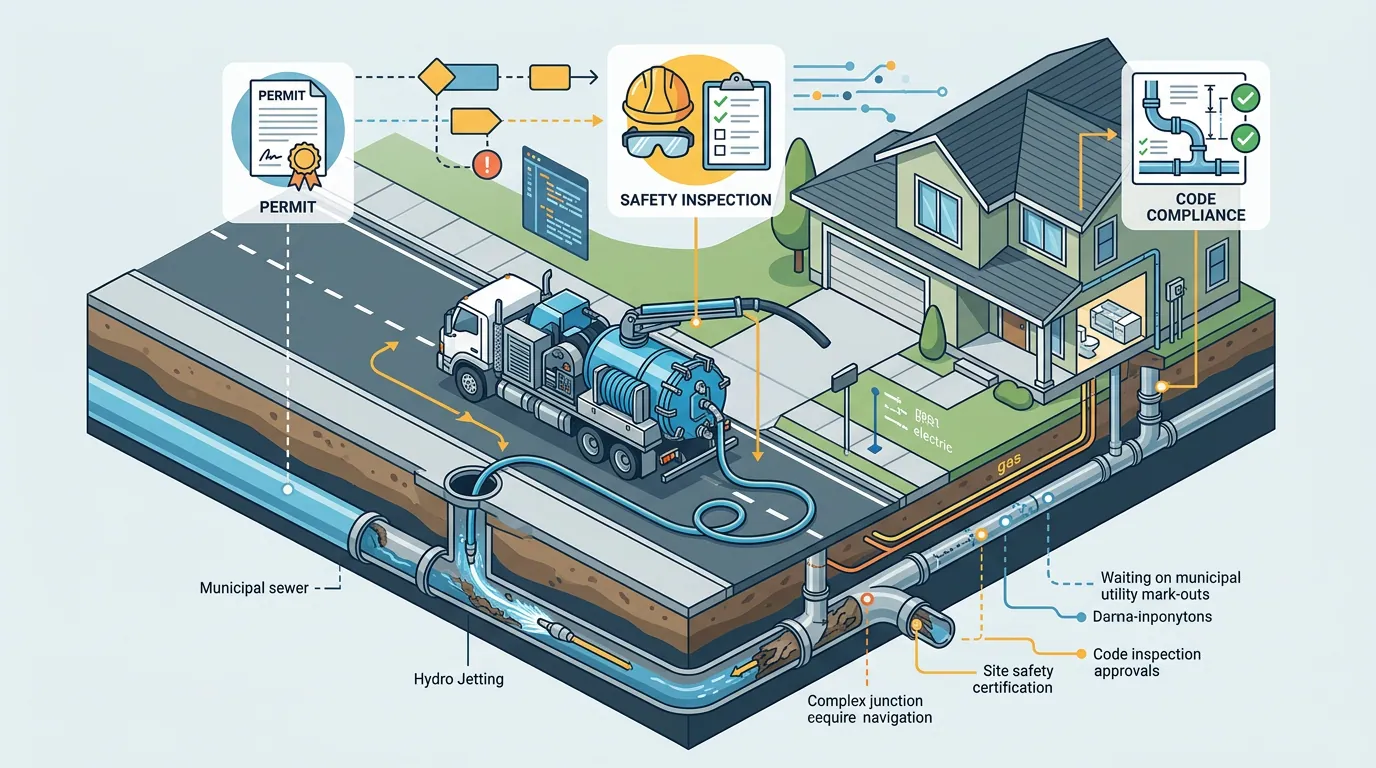
Say your sewer line backs up into the basement. You get a quote for jetting, but the tech can't find an accessible cleanout. Suddenly he's talking about pulling a toilet or cutting into a pipe. That's no longer a simple service call, it's minor demolition and repair. Depending on your municipality, that work might require a permit and inspection, especially if it involves the main sewer line.
High pressure water isn't forgiving. RIDGID's manual warns that high pressure jets are dangerous if misused and must not be directed at people. The WaterJet Technology Association reinforces that any fluid injection injury is a medical emergency. This is why licensing matters. The BLS reports most states require plumbers to be licensed, and that training includes understanding these hazards. Your cousin with a rented machine doesn't have that training.
High pressure safety: what contractors must not do
A professional will never point the nozzle at a person, live electrical equipment, or the machine itself. He'll wear appropriate protective gear. The work area will be contained. You should never see the hose end unattended while the unit is pressurized. If the crew is casual about the hose or lets kids or pets wander near the work area, shut the job down. That equipment can cut through flesh and cause catastrophic injury.
Licensing, permits, and inspections: the cost people forget to price
If the job requires opening a wall, cutting a pipe, or accessing a main line under the city sidewalk, ask about permits up front. OSHA regulations state that soil conditions and potential hazards shall be determined prior to opening an excavation. For deeper work, trenches 5 feet or greater require a protective system. That's commercial grade safety, but the principle applies. Any work beyond the cleanout can trigger local code requirements.
The permit fee and the time for an inspector to sign off are real costs. They're also your protection that the work was done to standard. Don't let a contractor skip them to give you a lower bid. The city inspector is the third party validation you're paying for.
How to Vet a Contractor Without Getting Upsold
How do you get an honest quote before someone decides you need a complete sewer overhaul? You start by demanding proof. Not a sales pitch. Proof.
Ask for a camera finding, not a promise
That verbal guarantee is worthless. Per RIDGID's own guidance, it is better to determine first the condition of the drain using a SeeSnake Camera. Before any quote is signed, you want to see the monitor. See the clog. See the pipe condition. A contractor who can't or won't run a camera first is guessing. Or worse, selling. Look, the equipment exists for simultaneous pipe inspection and location. If he has it, he should show it to you on the spot. If he doesn't have it, call someone who does.
Use the estimate checklist before you sign
Don't sign anything that looks like a handwritten receipt from a carbon-copy pad. The Federal Trade Commission states a written estimate should include a description of the work to be done, materials, completion date, and the price. That's your baseline. California's Contractors State License Board goes further. A thorough contract tells how the work will be done, when it will be done, what materials will be used, and how much it will cost. Compare those points side by side. If the estimate is vague on materials, ask him to name the product. Not "pipe lining material." The brand name and spec sheet. If he balks, you have your answer. Before you commit, run the numbers on your own. Get three written estimates, as the FTC recommends. Not three verbal ballpark guesses. Three written scopes with materials and timelines.
Choose the Right Scope for Your House (Not a Generic Drain Fix)
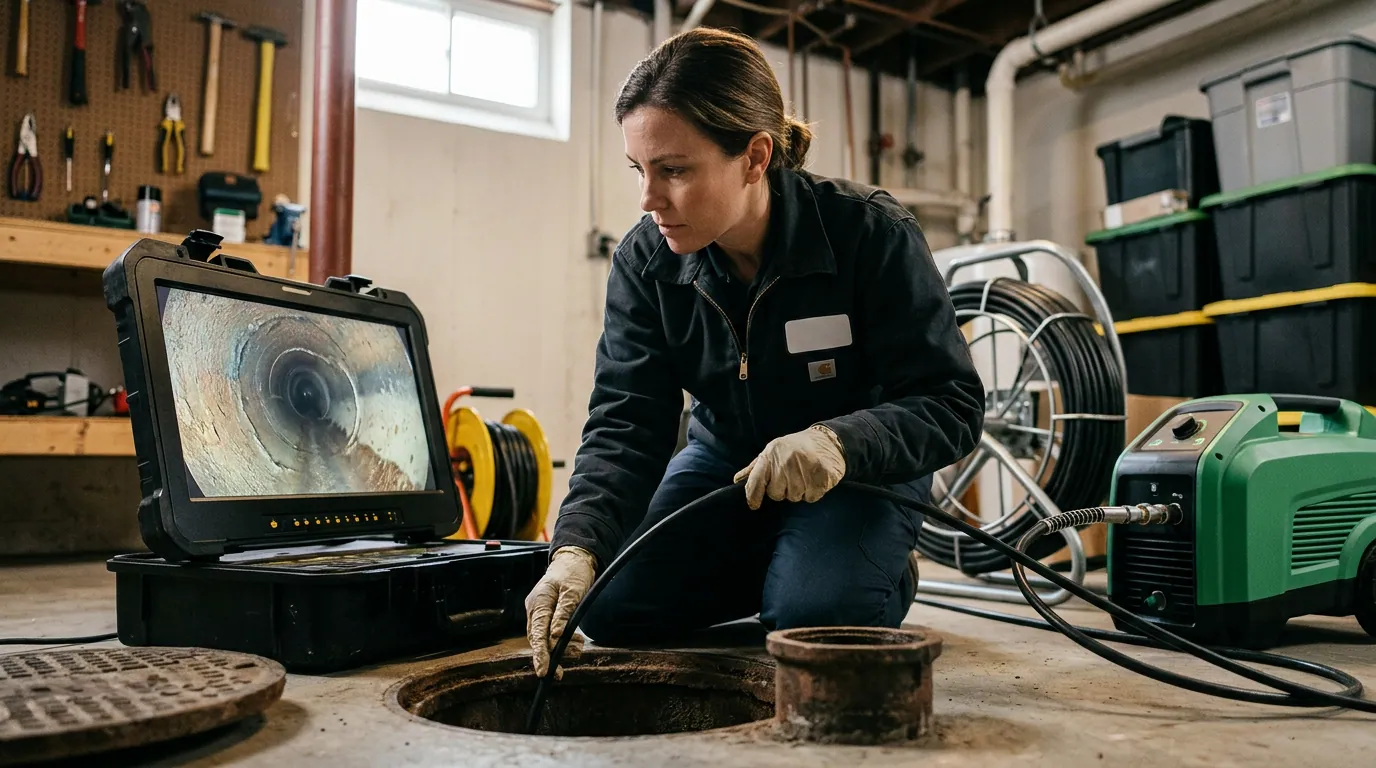
A standard residential jetter handles 1 ¼ to 4 inch lines, pushing up to 100 feet at 3,000 psi. That covers most interior branches and a fair stretch of the main sewer. But does your house actually fit that spec? The answer changes the job entirely.
Main line versus smaller lines: why scope changes the bid
Clearing a kitchen branch is a different animal than scouring a 4 inch cast iron main running sixty feet to the city tap. The setup, time, and risk aren't comparable. While standard PVC handles sewage drainage fine, old cast iron, clay, or Orangeburg pipe can be fragile. High pressure finds every weakness. Your contractor needs to identify the material and condition before quoting. Breaking the clog is the easy half. The question is whether the pipe can take the pressure without failing.
Timing and access: runs, turns, and household interruptions
The quote has to account for how the hose gets fed. Every ninety degree turn adds friction and time. A straight shot to the street? That's a half day. A line with three turns under the slab could eat the whole day. And you can't use any water while they're working. Toilets, showers, sinks, everything stops. That disruption is part of the scope. Is he pricing a morning job or booking your entire day? Get that in writing.
What to expect after jetting: confirmation checks
Demand a post job camera run. Not a promise, a second video. You need to see the line is clear. Wall-to-wall cleaning action means nothing if a collapsed section or a protruding root is still sitting there. This is your proof the work was done. Without it, you're taking someone's word. And that's the fastest way to pay twice for the same problem.
Frequently Asked Questions
Should a plumber camera the line before jetting?
Yes, every time. The shotgun approach fails. That's when a plumber jets a line without looking first and hopes it holds. It usually doesn't. Most states require plumbers to be licensed, according to the U.S. Bureau of Labor Statistics. But a license doesn't guarantee diagnostic rigor. The failure starts with skipping the camera.
How much does hydro jetting cost for a typical home run?
The range is wide because the inputs vary. Line length, number of turns, access difficulty, and whether a camera inspection is included. A simple kitchen line might run $300-$500. A full main line jet with pre and post camera documentation could be $800-$1,200. The price reflects the scope, not just the machine time. Always itemize. Run the service call, the jetting hours, and the camera documentation as separate line items.
What should your contractor measure before scheduling jetting time?
He should measure the length to the clog and the line diameter. He should confirm the pipe material. He should check for cleanout access. That's the basic diagnostic suite. Any quote given without those measurements is a guess. And you don't pay for guesses.
When is jetting the wrong call compared with a different service?
When the problem isn't a soft clog. Grease, soap, minor roots, sure. Jetting is the right tool. But a broken pipe, a severe belly in the line, or a complete collapse requires excavation or trenchless repair. Jetting a broken pipe can cause a sinkhole in your yard. It forces water into the soil around the break. The wrong tool is worse than no tool at all. Also, if the problem is just a worn flapper causing a running toilet, don't jet the sewer. The EPA says most toilet leaks are due to old or worn out toilet flappers. Fix the $15 part first.
Why do jetting quotes sometimes vary by 30 percent on the same clog?
Equipment, overhead, and scope inclusion. Some companies quote just the jetting time. Others include the camera before and after, the report, and a guarantee. Some run older machines that take longer. Some have higher insurance and labor costs. You're comparing three things: the machine capability, the diagnostic proof, and the company's overhead. If the numbers are far apart, the scopes are different. Make sure you're comparing the same line items.
Can homeowners request camera documentation and inspection results?
You not only can, you must. Per RIDGID's marketing, modern setups allow simultaneous pipe inspection. There's no reason not to get the video file. It's your property record. If a contractor hesitates to provide it, that's a red flag the size of a sewer lateral. Get the file. Save it. It's proof of condition before and after, and it protects you if a problem recurs next month.
Sources
Labor-hour and wage inputs: Bureau of Labor Statistics Occupational Employment and Wage Statistics, https://www.bls.gov/oes/. Material price trends: FRED producer price indexes, https://fred.stlouisfed.org/. Full FatBook methodology: https://thefatbook.com/plumbing/methodology/.