Is your bathroom remodeling bid fair?
Walk in Shower Costs in 2026: the real range by install scope
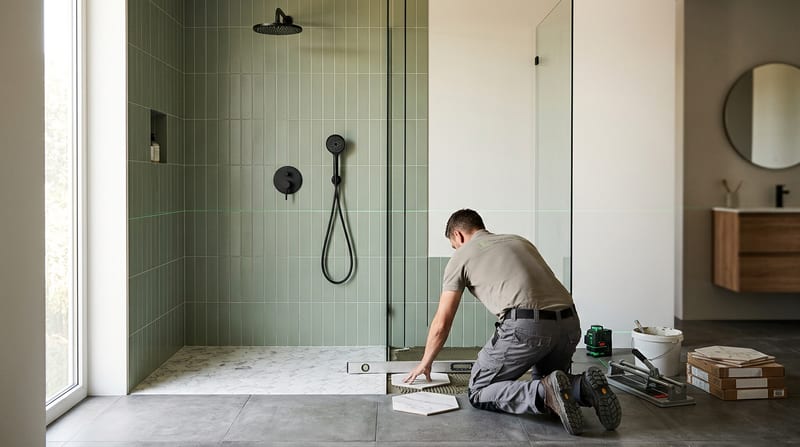
A professionally installed walk-in shower averages $9,147 in 2026, per our cost index, and one thing moves that number above all others: scope. What the walls are made of, whether the plumbing moves, and whether the build has to meet accessibility code set the spread. Our index prices the job in three grades. A budget build, an acrylic base and prefab surround set in an existing alcove with the plumbing left alone, runs about $4,624. The mid-range job most homeowners picture, tiled walls, a frameless glass panel, and a waterproofed pan, is the $9,295 national average, with most jobs landing between $8,326 and $10,339. A premium curbless build in custom stone, with a thermostatic valve and a frameless glass enclosure, runs about $14,919. Region moves all three. Our index prices high-cost metros like Boston, Seattle, and New York 17 to 33 percent above the national average once prevailing labor rates and permit fees are factored in, so a mid-range job that averages $9,147 nationally can push past $12,000 in New York.
A basic prefab replacement in an existing alcove might land between $4,000 and $7,000. That assumes the plumbing stays put and you're using a factory-made pan and walls. A two-person crew can typically set a prefab unit in one to two days. Opt for a custom tile build, however, and costs jump, along with the timeline. Labor for tile installation and waterproofing membranes pushes projects into the $8,000 to $13,000 range and typically takes one to two weeks from demo to final grout. High-end installs with relocated plumbing, custom mortar beds, and frameless glass easily exceed $14,000 and can stretch to three or four weeks once you account for plumbing rough-in inspections and cure times. Most homeowners underestimate the labor hours behind a proper tile shower, which is why the scope breakdown matters more than the headline number.
Scope expands with accessibility features. Add a roll-in shower or grab bars and the requirements multiply. For a standard roll-in shower, the minimum is 30 inches wide by 60 inches deep. That size, plus a bench and safety bars, adds material and labor cost. Material choice matters too. Kohler's LuxStone walls are nonporous and grout-free, a different beast than tile, which demands more involved waterproofing.
One cost variable that catches people off guard is waterproofing method. A liquid-applied membrane like RedGard costs less in materials (roughly $30-$50 per bucket covering 55 square feet) but demands meticulous application: two coats, proper cure time, and careful detailing at corners and niches. A sheet membrane system like Schluter KERDI is faster to install and more foolproof at seams, but the material cost runs two to three times higher. The choice between them doesn't just affect your material line item; it changes labor hours, which is where the real budget impact lands. A poorly applied liquid membrane is also a leading cause of shower leaks discovered years later, turning a $200 savings into a $5,000 remediation project.
Walk in shower sizes and ADA requirements that affect price
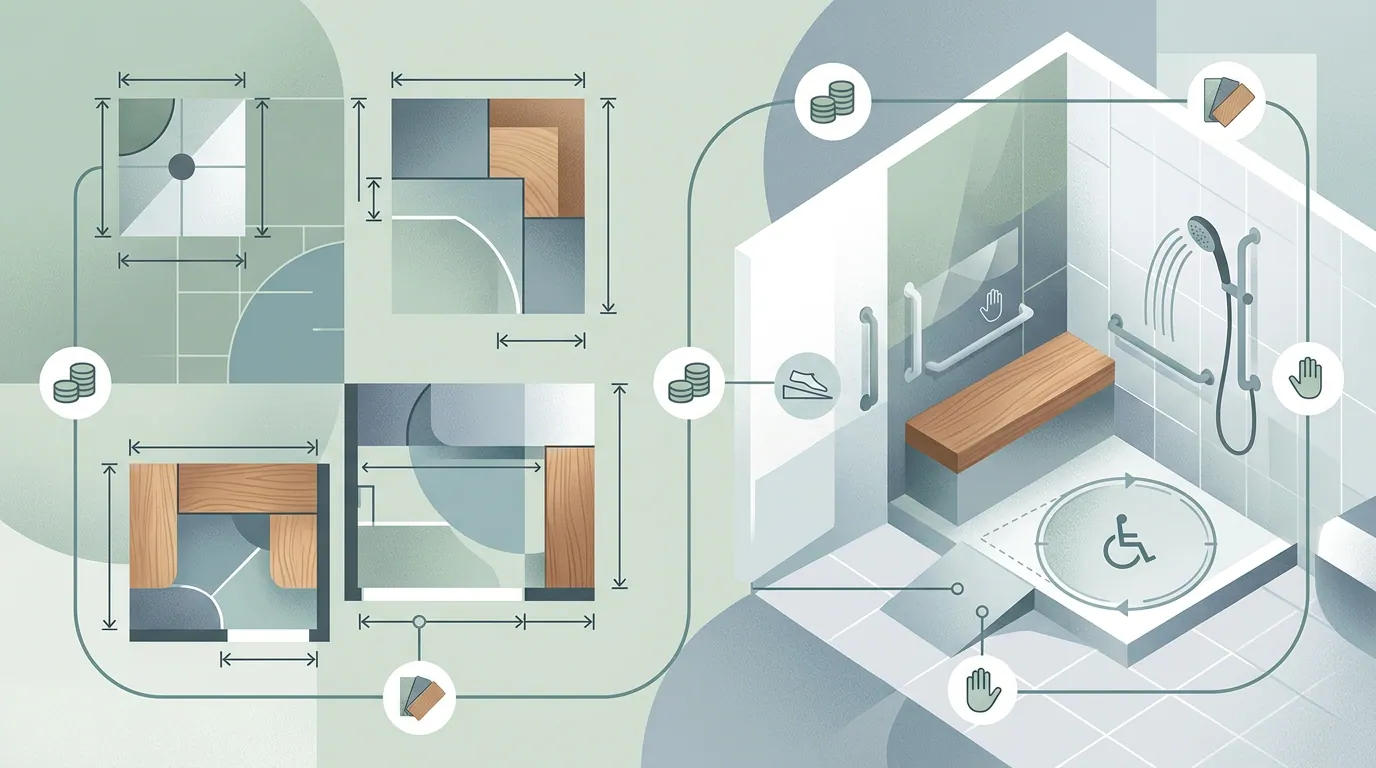
Code compliance drives dimensions, and dimensions drive price. An ADA transfer shower needs a 36-by-36 inch interior. For wheelchair access, a roll-in shower must be at least 30 by 60 inches. These minimums are codified in ICC A117.1-2017 Section 608, which governs accessible shower compartment sizes, threshold heights, and clearances in residential and commercial construction.
These aren't suggestions; they're mandates with price tags. According to Angi's cost data, materials for a standard 60-by-30 inch roll-in model average about $2,600. Go bigger to a 63-by-39 inch unit, and material costs jump to roughly $3,600. The real expense, though, is often the labor, especially for a curbless installation. That's where the total project cost truly expands.
Beyond the minimum footprint, there's a practical dimension most homeowners overlook: the clear floor space outside the shower. ADA guidelines require a 60-inch turning radius for wheelchair access in the bathroom itself, not just inside the stall. If your bathroom can't accommodate that, you're looking at wall relocation or a complete layout redesign, work that can add $3,000 to $8,000 before you even touch the shower itself. Even if you're not building to full ADA compliance, aging-in-place planning follows the same logic. A shower that technically meets interior dimensions but opens into a cramped 48-inch-wide bathroom creates a usability bottleneck that undermines the entire investment. Measure the full path of travel, not just the shower box.
Labor and materials breakdown: where your bid really comes from
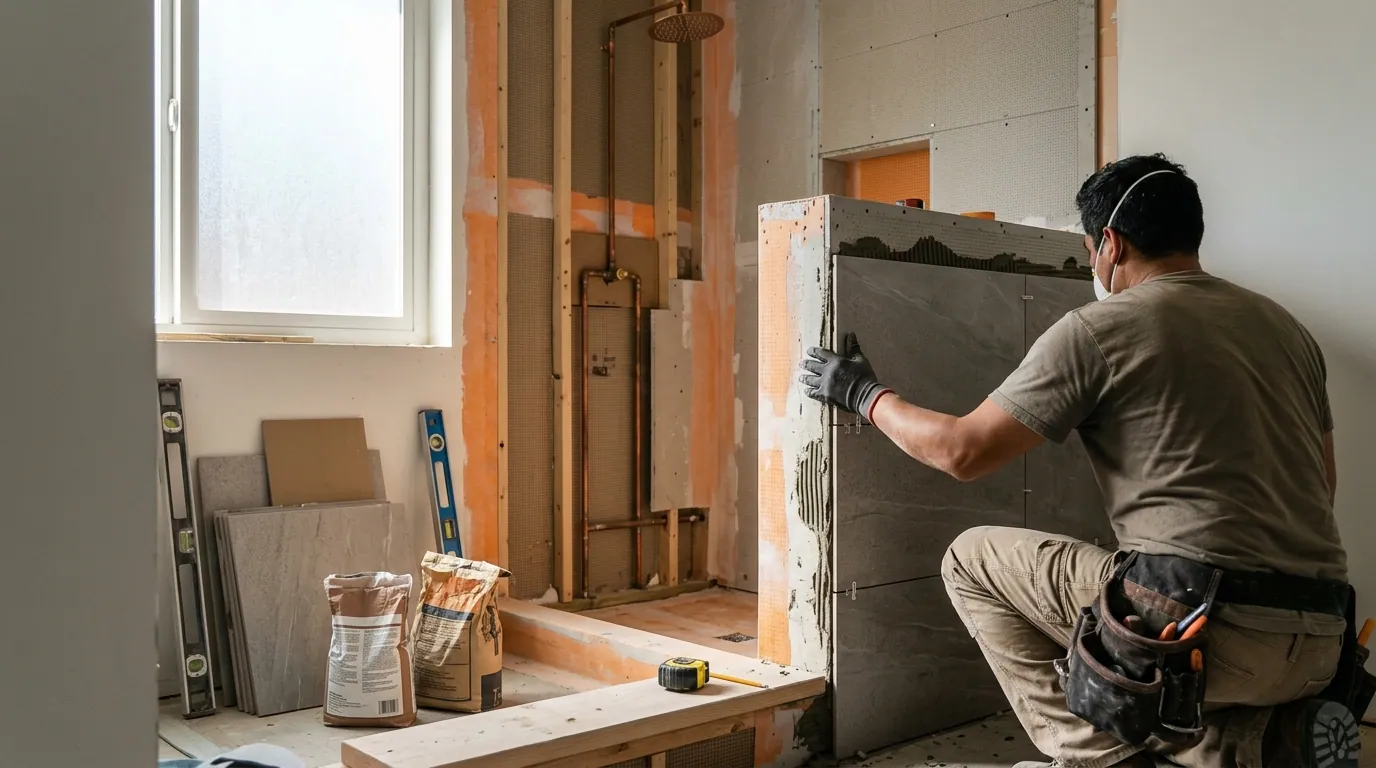
Labor costs scale with code-mandated structural requirements, and those requirements dictate both your material choices and installation methods. The same Section 608 of the accessibility code specifies that any grab bar must withstand a vertical or horizontal force of 250 pounds and maintain a 1.5-inch clearance from the wall. That 250-pound spec is the floor, not a target. It's the absolute minimum your backing structure must handle, which rules out simple drywall anchors in almost every real-world scenario.
Proper blocking adds cost, but it's non-negotiable for safety. Installing a 2x6 backing board between studs during a remodel takes 15 to 20 minutes per location and costs $50 to $100 in materials and labor. The math changes completely if the walls are already finished. Retrofitting blocking into an existing tiled wall means cutting, installing wood, patching, and refinishing, a process that easily runs $200 to $500 per bar. That's before you even buy the bar itself.
Material selection then drives the second major cost variable. A basic stainless steel bar might run $30, while a designer model from a brand like Moen can exceed $150. Matte or brushed finishes provide better wet grip than polished ones, a practical detail that often justifies a slightly higher material cost.
One detail that deserves its own line item: fold-down shower benches. A wall-mounted teak or phenolic bench rated for 400+ pounds needs even more robust blocking than a grab bar. Typically that means a full plywood backer panel spanning three or more stud bays rather than a single 2x6 block. The bench itself runs $200 to $600 depending on material, but the structural prep behind the wall can add another $300 to $700. If your contractor quotes a bench install at $250 total, they're either planning to surface-mount into tile (a failure waiting to happen) or they haven't thought through the load path. We recommend asking specifically how the bench will be supported and what's going behind the finished wall.
Tub-to-shower conversions vs new walk-ins: the hidden-cost failure modes
Conversions cost differently because you're working within the footprint of an existing tub alcove. The project seems straightforward until you price the plumbing. A tub-to-shower conversion typically runs $2,000 to $12,000. A new installation in a different location starts at $4,000 and can exceed $20,000.
The common failure mode is assuming the conversion is always cheaper. If the existing drain and supply lines don't align with the new shower pan, rough-in plumbing jumps from an average of $600-$1,600 to as much as $7,000. That single change can erase the cost advantage over a new build. The subfloor is the next variable. A curbless design requires a custom mortar bed or pan to create the drainage slope, a modification that adds roughly $2,500. So a conversion meant to save money can easily approach the cost of a new, simpler installation elsewhere.
Another hidden-cost failure mode specific to conversions: the tub drain is typically a 1.5-inch line, while many modern shower pans, especially linear drain systems, require a 2-inch drain. Upsizing that pipe means opening the subfloor, sometimes cutting into a finished ceiling below in two-story homes. In a slab-on-grade house, you're talking about cutting concrete, which alone can run $1,000 to $2,500 depending on access and depth. Slab cuts on older homes commonly land at the top of that range when the new drain sits far from the existing cast-iron stack, or when the slab turns out to be reinforced with rebar that has to be cut and tied back. Contractors who quote tub-to-shower conversions without scoping the existing drain diameter are setting you up for a mid-project change order. Before signing any contract, we insist you ask whether the existing drain has been inspected and whether it meets the requirements of the specific pan or drain system being installed.
Pick the right shower format in 2026: curb, curbless, or prefabricated
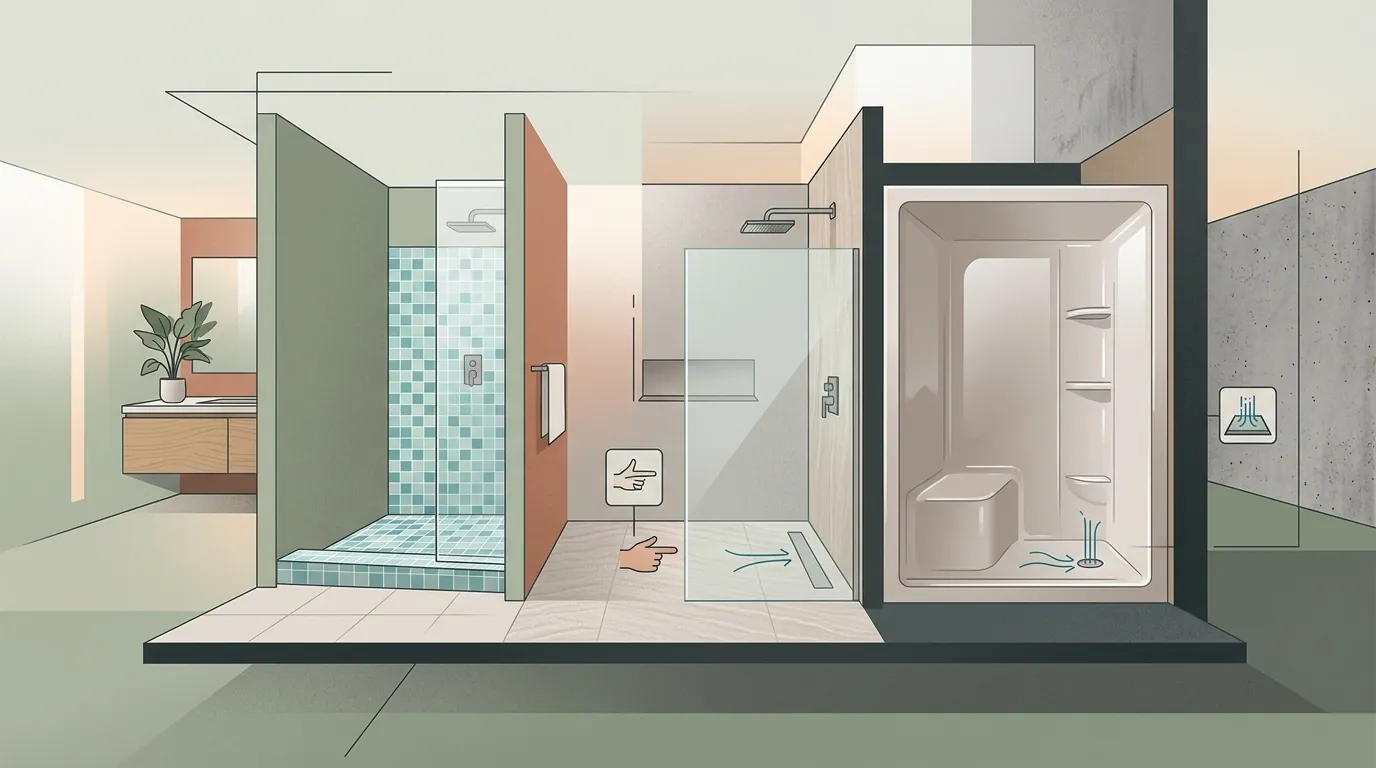
When a conversion approaches new-build pricing, evaluate all three formats from scratch. Your main choices are a traditional curbed shower, a curbless or zero-threshold design, and a prefabricated kit. Each carries its own cost range and installation demands.
A curbed shower is the workhorse. It's simpler to waterproof, contains water effectively, and works with your existing floor structure. This format keeps project costs lower and is the most forgiving for a standard bathroom remodel. If your priority is a reliable, cost-effective update, this is often the right starting point. The curb itself, typically 4 to 6 inches high, acts as a secondary water barrier, meaning minor imperfections in the pan slope or membrane are less likely to cause leaks into the subfloor. For DIY-friendly homeowners doing part of the finish work themselves, a curbed design offers more margin for error than any curbless alternative.
Curbless designs offer a seamless, open look and remain the most accessible option for aging-in-place and wheelchair-accessible bathrooms. But they demand serious planning. The same accessibility code limits thresholds to a height of one-half inch, which is one reason true curbless or very-low-threshold work can increase framing and waterproofing complexity. The subfloor often needs modification to create the drainage slope, adding significant labor and material cost. These installs typically run 30 to 50 percent more than a comparable curbed project. There's also a maintenance caveat: without a curb to contain overspray, curbless showers depend entirely on floor slope and drain capacity to prevent water from migrating into the bathroom. Undersized drains or slight settling over time can turn a sleek design into a chronic puddle problem. A linear drain running the full width of the threshold opening mitigates this risk but adds $300 to $800 to the material cost versus a standard center drain. For curbless installs, recommended linear drains include Infinity Drain (their S-AG series handles up to 18 GPM), Schluter KERDI-LINE, or QuARTz by ACO; all three integrate cleanly with bonded waterproofing membranes and come in lengths matched to standard shower openings from 24 to 72 inches. One 2026 wrinkle: post-tariff pricing on stainless steel drain components has pushed some linear drain systems 10 to 15 percent above 2024 list prices, and lead times on certain Infinity Drain SKUs have stretched to six to eight weeks. Order drain hardware as soon as the shower format is locked in, not after demolition starts.
Prefabricated kits, usually acrylic or fiberglass, are the fastest and most budget-friendly option. The trade-off is limited customization in size, shape, and finish. Prefab units are the standard choice in rental properties and guest baths, where the priority is speed and reliability over aesthetics. A two-person crew can typically set a one-piece acrylic unit in half a day, versus three to five days for a comparable tile build, and there's no cure time to worry about. That said, they carry a lifespan consideration: most acrylic pans are warranted for 10 to 15 years, while a properly built tile shower with a quality membrane can last 20 to 30 years before major maintenance. Bathroom updates with durable finishes tend to recover a higher share of project cost at resale than builder-grade materials, and remodeling activity has held strong year to year, a pattern the National Association of Home Builders has documented through its remodeling market index. If you're planning to stay in the home long term, the per-year cost of a custom build may actually be lower than cycling through prefab replacements.
Quick-reference cost table
| Component / Scope | Typical Range | Typical Timeline |
|---|---|---|
| Prefab alcove replacement (labor + materials) | $4,000 to $7,000 | 1 to 2 days |
| Custom tile build (curbed, no plumbing relocation) | $8,000 to $13,000 | 1 to 2 weeks |
| High-end install (relocated plumbing, frameless glass) | $14,000 to $20,000+ | 2 to 4 weeks |
| Curbless upgrade (added cost over curbed) | +30% to 50% | +2 to 5 days |
| Tub-to-shower conversion | $2,000 to $12,000 | 3 to 10 days |
| Rough-in plumbing (if lines move) | $600 to $7,000 | 1 to 3 days |
| Slab cutting for drain relocation | $1,000 to $2,500 | 1 day |
| Grab bar install (retrofit, per bar) | $200 to $500 | 1 to 2 hours |
| Fold-down bench (including structural prep) | $500 to $1,300 | 3 to 6 hours |
| Permits | $150 to $300 | varies by city |
| Regional adjustment (high-cost metros) | +13.3% to 28% | n/a |
Rules for getting a usable quote: scope, markup, and inspection readiness
If you're pricing a prefab swap or a full custom build, your quote needs to be precise. Some in-home sales pitches carry a three-business-day cancellation window under FTC rules, but that protection is useless if the quote itself is vague. Demand a written, itemized breakdown. A single total number is a red flag. It should list materials, labor, and specific allowances for tile, fixtures, and the pan.
Those line items let you compare contractors fairly. They also reveal the markup structure. Labor typically eats 40 to 65 percent of the budget. On top of that, a general contractor's overhead and profit usually add another 10 to 20 percent. If a quote seems too low, something's missing. Often it's the contingency for hidden problems.
Your quote must account for inspection readiness. This means pulling permits for plumbing and electrical work, which a reputable contractor will include. The permit cost, often $150 to $300, is your proof the work will be inspected to code. It's also what keeps your insurance valid if a pipe fails later.
A quote that skips permits isn't a bargain. It's a liability you're assuming. Always budget a 10 to 20 percent contingency on top of the quoted price. This covers the corroded pipe or faulty wiring discovered after demolition begins. A contractor who resists this buffer is either inexperienced or planning to hit you with change orders later. Get the scope, markup, and permit plan in writing before you sign.
One more practical step: ask for a payment schedule tied to milestones, not calendar dates. A typical structure is 10 to 15 percent at signing, 30 to 40 percent at rough-in completion (after inspection), and the balance at final walkthrough. Contractors who demand 50 percent or more upfront before any work begins create a financial imbalance that removes their incentive to stay on schedule. Milestone-based payments protect both parties and give you natural checkpoints to verify the work matches the scope document before releasing the next draw.
Sources
Labor-hour and wage inputs: Bureau of Labor Statistics Occupational Employment and Wage Statistics, https://www.bls.gov/oes/. Material price trends: FRED producer price indexes, https://fred.stlouisfed.org/. Remodeling market context: National Association of Home Builders, https://www.nahb.org/. Full FatBook methodology: https://thefatbook.com/bathroom-remodeling/methodology/.