Is your painting bid fair?
How Much Does Whole House Painting Cost in 2026?
Chuck Thompson ran L.C. Thompson Construction in Jefferson City, Missouri, for three decades. The figures throughout come from TheFatBook Cost Index V3 2026, built on BLS wage and Craftsman labor data. Full details are on the methodology tab.
Whole house painting runs $9,908 nationally in 2026 for a 2,500 square foot home, per TheFatBook Cost Index V3 2026, with a range of $9,069 to $11,996. That all-in number covers interior, exterior, and prep. So you get a real benchmark instead of per-room guesses that almost never add up to a finished project.
The National Number for a 2,500 SF Home
New homes have a median size of 2,210 square feet. Our index runs the math at 2,500 square feet so it captures a full interior and exterior job. Housecallpro.com puts interior painting at $2-$6 per square foot and exterior at $1.50-$4. A single interior room in 2026 lands around $832 in our index.
What That Price Actually Covers
The baseline pays for everything it takes to hand back a finished house. Painters in construction and maintenance pulled a median annual wage of $49,400 in May 2025, which is why labor usually drives the whole bill. BEHR's masonry paint TDS says new stucco and masonry must cure 30 days before painting, and it calls for powerwashing to strip chalk. That's the prep that runs up an exterior bid on masonry and stucco homes. Skip the cure window or the wash, and the paint fails fast, which means redoing the job way sooner than anyone planned. Those are the steps a thin bid leaves out.
Interior vs Exterior: Where the Square Footage Splits
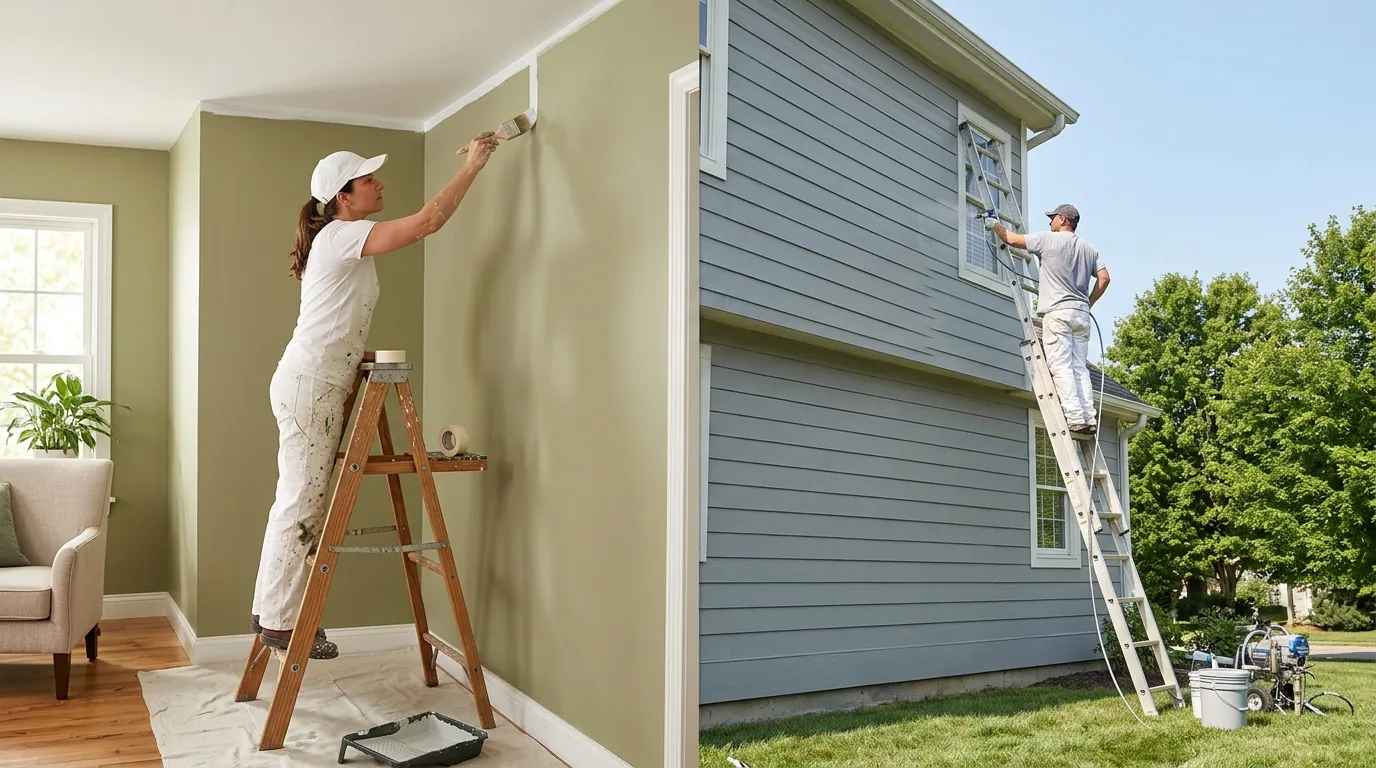
A full interior repaint, not the exterior, is the bigger line on the same house. Interior work burns 59.17 labor hours against 51.57 outside, because every room adds walls, ceilings, and trim. What makes exterior hours expensive is the kind of work they are, ladders, scraping, washing, weather, not how many there are. Stack the two lines and they land within about $100 of the whole-house total.
The Exterior Line and Where Its Hours Go
Exterior runs $4,675, and the 51.57 labor hours behind it are where that money goes. Those hours pile up from scraping, washing, ladder work, and weather delays an interior job never touches. Run those hours back before you trust a start date: 51.57 is about a two-painter crew for three full days. If a bid quotes that exterior at a day and a half, ask who's on the crew, because the math says four hands, not two. Sherwin-Williams Duration calls for one coat on repaints or two on new surfaces and allows application down to 35°F, so timing and material loads push the number. The whole house line carries its own $9,908 for 2,500 square feet because it bundles both surfaces with deeper prep.
| Scope | Cost | Labor Hours |
|---|---|---|
| Exterior Only | $4,675 | 51.57 |
| Full Interior | $5,046 | 59.17 |
| Whole House | $9,908 | 111 |
Source: TheFatBook Cost Index V3 2026. Add the exterior and full interior lines and you get $9,348 across just under 119.3 hours, within about 1% of the whole-house record. The headline number checks out against its own parts, and the last $92 sits in the deeper prep a bundled job carries.
The Interior Line and Its Labor Hours
A full interior runs $5,046, with a range of $4,606 to $6,093, and it burns 59.17 labor hours. Those hours are gentler than exterior hours, controlled rooms, no ladders, no weather, but there are more of them because the scope touches every room in the house. Housecallpro.com reports full interior repaints commonly run $3,000 to $8,397 in 2026, and the index figure sits inside that band. Don't mix it up with the index's Partial Interior line: $1,051 and 14.17 labor hours buys walls-only work on a room or two, a refresh, not a full repaint.
The Prep Work That Decides Your Quote
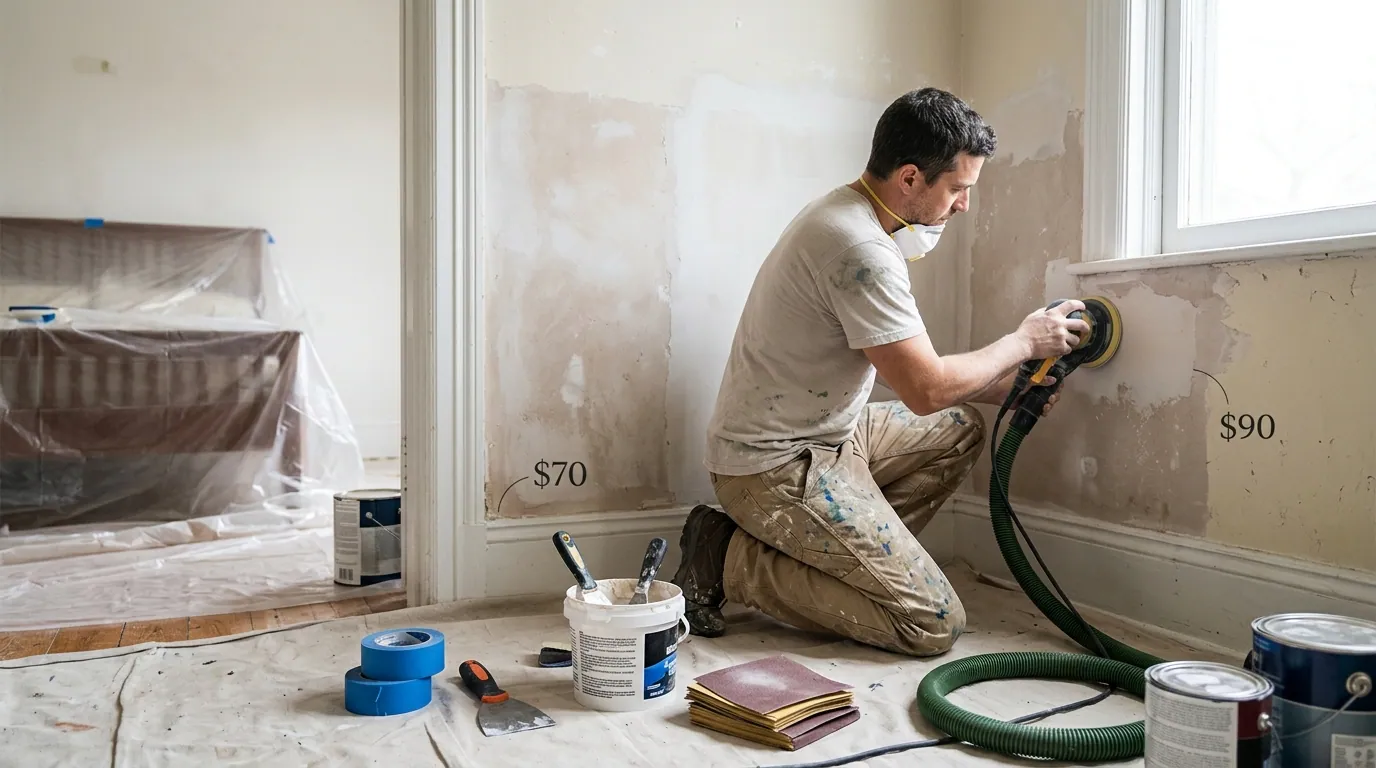
Most contractors hand you a quote without breaking out the prep scope. Prep is the thing that sorts the quote worth paying from the one that has you doing touch-ups before the season's out.
Surface Condition and Coat Count
Bare versus repainted changes everything. The one-coat-versus-two-coat split can double both paint volume and labor. Indexbox.io analysis shows super-premium and specialty formulations can top $70 per gallon and sometimes hit $90 or more. Drop the second coat to save a few gallons and the color goes blotchy within a season. Coat count is the first line a lowest bid trims.
Masonry, Stucco, and Cure Times
You can't rush fresh stucco or masonry. That 30-day cure and the power wash add time and money both. On stucco jobs the mistake I saw most was a crew rolling fresh color over green masonry to beat a deadline. Inside a year the homeowner was looking at peeling and a full redo. The scope has to include full surface prep on these materials, no exceptions.
Lead-Safe Rules on Older Homes
EPA Lead Renovation data shows the federal government banned lead-based paint for home use in 1978, and roughly three-quarters of US homes built before then still hold some. The rule covers contractors disturbing painted surfaces in pre-1978 houses, apartments, and child-occupied facilities, including education, training, certification, and work-practice requirements. On older properties that protocol raises the price, and for good reason. Confirm the painter's lead-safe certification before you sign so the work meets federal standards and keeps your family safe. A bid that never names RRP compliance is one I wouldn't sign.
Paint Tiers and How to Read a Painter's Quote
Paint grabs attention in every quote, but it's a minority slice of the final bill. A $20 jump per gallon moves a whole-house total less than homeowners brace for.
Per-Gallon Price Tiers
Indexbox.io's analysis shows value and private-label latex paints typically range from $15 to $25 per gallon at retail in the US. National-brand core-tier runs $30-$45, premium-tier reaches $50-$65. Map those tiers against the contractor margin target and you see what the painter is building in.
| Paint Tier | Per-Gallon Price |
|---|---|
| Value/Private-Label | $15-$25 |
| National-Brand Core | $30-$45 |
| Premium | $50-$65 |
Lower tiers leave more room for the contractor's margin. Even so, the tier you pick rarely swings your total the way labor does. I had a customer spend a week comparing two premium paints with maybe $15 a gallon between them, then sign a bid that skipped the second coat to save a day of labor. The paint difference would've cost him nothing, but the dropped coat cost him a full repaint inside a year. You still want transparency, which means pinning down the exact tier before anyone opens a can.
Minimum Charges and the Spec Sheet
Minimum charges for small painting projects run $250-$579. That's why a tiny job feels so expensive per square foot, since setup and protection burn time no matter how small the room. Always ask for the spec sheet naming brand and model so you can price the materials yourself and pull out the true margin.
With the written quote and current retail paint prices in hand, read it this way:
- Request the spec sheet naming brand, tier and model.
- Obtain the estimated gallons for your surfaces.
- Verify those prices at retail sources.
- Subtract paint cost to reveal labor and margin.
Get the tier and the gallon count nailed down before you put two quotes side by side.
What You're Actually Paying For: Labor, Materials, and Margin
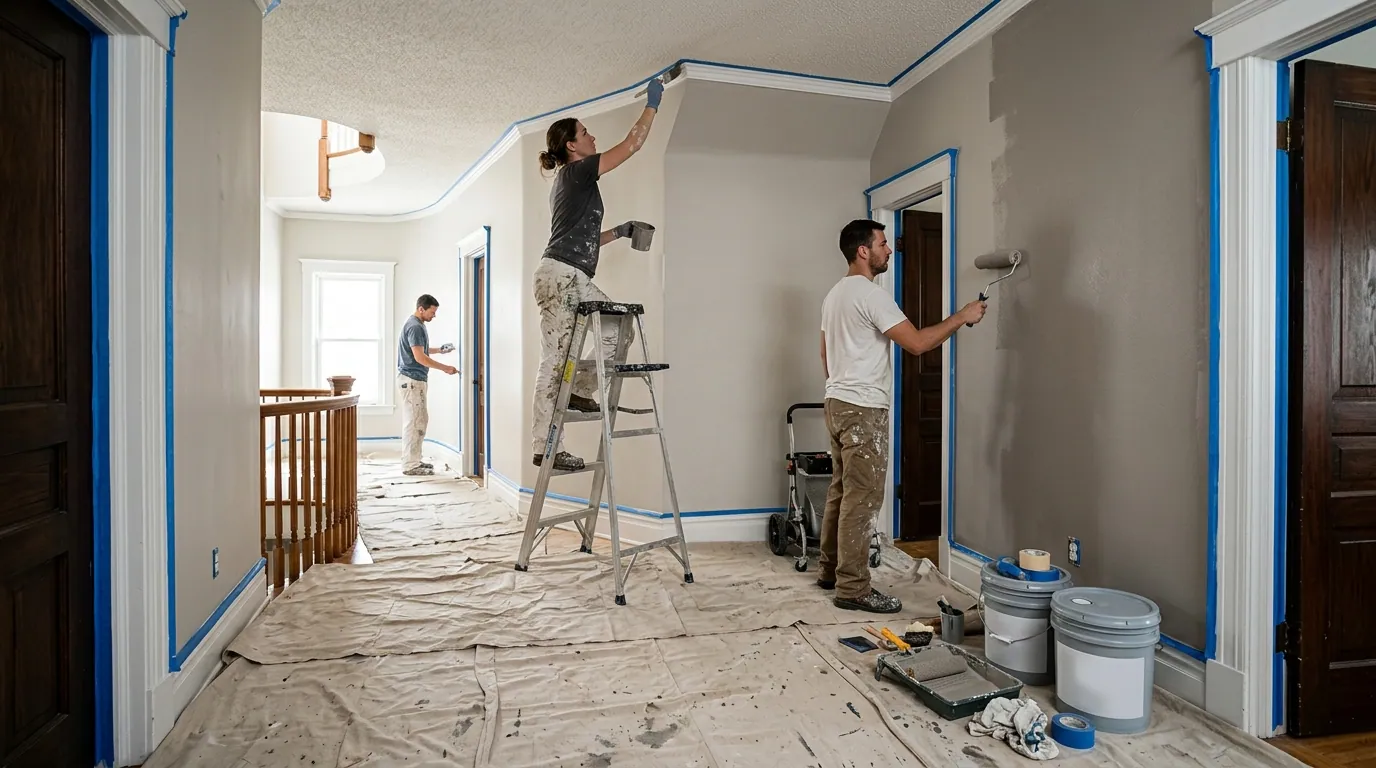
$4,359 goes to labor on that baseline. That's 44% of the total, and it covers install labor only.
The Four Lines That Build the Bill
The numbers split into labor, materials, overhead, and a named contractor margin. The table below shows where every dollar lands.
| Component | Amount | Percentage |
|---|---|---|
| Labor | $4,359 | 44% |
| Materials | $2,380 | 24% |
| Permit | $0 | 0% |
| Overhead | $1,658 | 17% |
| Contractor Margin | $1,441 | 15% |
| Total | $9,908 | 100% |
Housecallpro.com puts the profit band painting contractors aim for at 20-40 percent, and that $1,441 contractor margin sits below it. Materials hit $2,380, and BEHR's masonry sheet lists lower coverage on rough substrates than smooth, so a rough exterior burns extra gallons without moving the total much.
Why Labor Is the Loaded Rate, Not the Wage
The index starts with the BLS painter wage of $26.64 per hour, pulled from BLS OES 47-2141, May 2025 release, then loads it to a burdened rate of $36.54 per hour once taxes, insurance, and other employer costs stack on. That roughly $10 spread is the burden line. What a painter pockets never matches what you pay. Burden turns the hourly figure into the real cost of getting a crew on site, staging gear, and eating downtime. I watched this line inflate bids for years when I hired painting subs, because skipping the loaded math gives you a quote that looks cheap right up until the invoice shows up. Check How we calculate these numbers to see exactly how those layers build. The base wage never tells you what the crew actually costs. The loaded rate does.
What Whole House Painting Costs by Metro
Identical scope costs you a different number in every metro, and the spread runs to thousands on one 2,500 SF job. I bid work that lived or died on the labor line alone, same paint in the can, just a pricier crew market.
The Five-Metro Spread
Chicago tops the five at $12,076, then Denver at $10,133, Phoenix at $9,301, Atlanta at $8,939, and Austin at $8,706 per this analysis. Each starts from the national baseline, then local wages, climate, and substrate push it up or down.
| Metro | Cost |
|---|---|
| Chicago | $12,802 |
| Denver | $10,645 |
| Phoenix | $9,656 |
| Atlanta | $9,105 |
| Austin | $8,867 |
Climate, Substrate, and VOC Rules
Phoenix gives crews paintable weather almost every day of the year. Chicago loses a good chunk of the calendar to cold, and Denver sees roughly 150 freeze days that squeeze the exterior season and the scheduling window. When crews lose productive days in rough climates, rates climb to hold their income steady. Substrate bends the math too, because that same lower coverage on rough surfaces means stucco-heavy markets like Phoenix and Austin chew through more gallons and more labor. California stacks on extra cost from its VOC rules, with interior latex capped at 50 g/L for flat and 100 g/L for non-flat against national limits of 250 and 380 g/L. Craftsman Book Company calls paint estimating more art than science, and the metro spread is why.
Frequently Asked Questions
How much can a whole-house paint job swing up or down?
For a typical 2,500 sq ft whole-house job, the national installed price is $9,908, with a range from $9,069 to $11,996. That swing usually isn't "paint brand only". It's prep scope and delivery risk in the schedule. You're really paying for whatever conditions turn up once the crew gets going.
What part of the cost is "real labor" versus the rest of the bill?
On the baseline whole-house project, the install labor line is $4,359, and that's 44% of the $9,908 total. The labor line is crew time on the actual work. Materials, overhead, and the contractor margin cover the rest of getting it finished and insured. To compare bids fairly, line up the prep steps each one lists, not the final total.
Why do bids for older houses sometimes come in higher?
Older homes can trip extra compliance steps the moment painted surfaces get disturbed. EPA's rule covers "houses, apartments and child-occupied facilities" when the project disturbs painted surfaces (with smaller-threshold situations described as "six square feet or less of interior painted surface or 20 square feet or less of exterior painted surface"). When that line isn't written into the proposal, that's exactly where a "low bid" balloons into change orders.
When should you plan to schedule the job so it doesn't stall?
Exterior work is where weather hijacks your timeline, since crews need workable conditions to keep moving and hold the finish consistent. If you need a firm start date, ask the contractor for a weather backup plan and which prep steps the weather could stall, then get the answer written into the scope. On a whole house, a clean schedule is part of cost control.
Can I lower my cost by choosing a cheaper paint tier?
You can nudge the bill with the paint tier, since value/private-label latex runs $15-$25 per gallon while national-brand core runs $30-$45. But on a whole-house job, materials are only $2,380 of the $9,908 baseline total, so paint savings won't wipe out prep and labor-driven pricing on their own. Cutting cost starts with scope, not paint. Tighten the scope first, then pick the cheapest tier that still covers in the quoted coat count.