
Is your painting bid fair?
How Much Does Interior Painting Cost in 2026?
Chuck Thompson is a retired homebuilder and contractor who owned L.C. Thompson Construction in Jefferson City, Missouri. The Cost Index referenced throughout this article is our proprietary dataset that powers all of our calculators and bid-fairness checkers. Full details are on the methodology tab.
The National Number and the Range
Our cost index puts the national average for a full interior repaint at $5,046, with most jobs landing between $4,618 and $6,109. That figure covers an existing home's walls, ceilings, and trim, priced on a 2,500 square foot reference house. It sits inside the $3,000 to $8,000 band you'll see quoted elsewhere: partial refreshes, which our index prices separately at $1,051, fill out the bottom of that band, while vaulted ceilings, multi-story stairwells, and gut jobs drive the top. Plenty of homeowners brace for a five-figure quote, so the average usually lands as a relief. Housecall Pro's 2026 guide frames interior work at $2 to $6 per square foot, with a single room typically running $400 to $1,200.
Where the Money Actually Goes
The split is not what most people guess. Of that average, the crew's labor takes $2,163, materials run about $1,260, and overhead and the contractor's margin make up the rest. Paint is a quarter of the bill, real money but not the driver. Labor still carries the job. A premium gallon of interior acrylic covers 400 to 450 square feet, and you'll need primer, caulk, tape, and plastic on top of that. We calculate labor in Craftsman hours times a BLS wage. Prep eats most of those hours: taping, sanding, patching, the unglamorous work that decides whether the finish lasts. Skimp on it and even a premium gallon flashes at the seams.
Location swings the total more than any other single variable. Here's how the 2026 index prices the same full repaint across five major metros.
| Metro | Average full interior repaint | Typical range | vs. national |
|---|---|---|---|
| Austin | $4,526 | $4,089-$5,295 | -8% |
| Denver | $5,416 | $4,925-$6,487 | +7% |
| Atlanta | $4,642 | $4,230-$5,530 | -5% |
| Chicago | $6,484 | $6,031-$7,806 | +28% |
| Phoenix | $4,917 | $4,466-$5,791 | -1% |
Paint Tiers: What a Gallon Costs in 2026
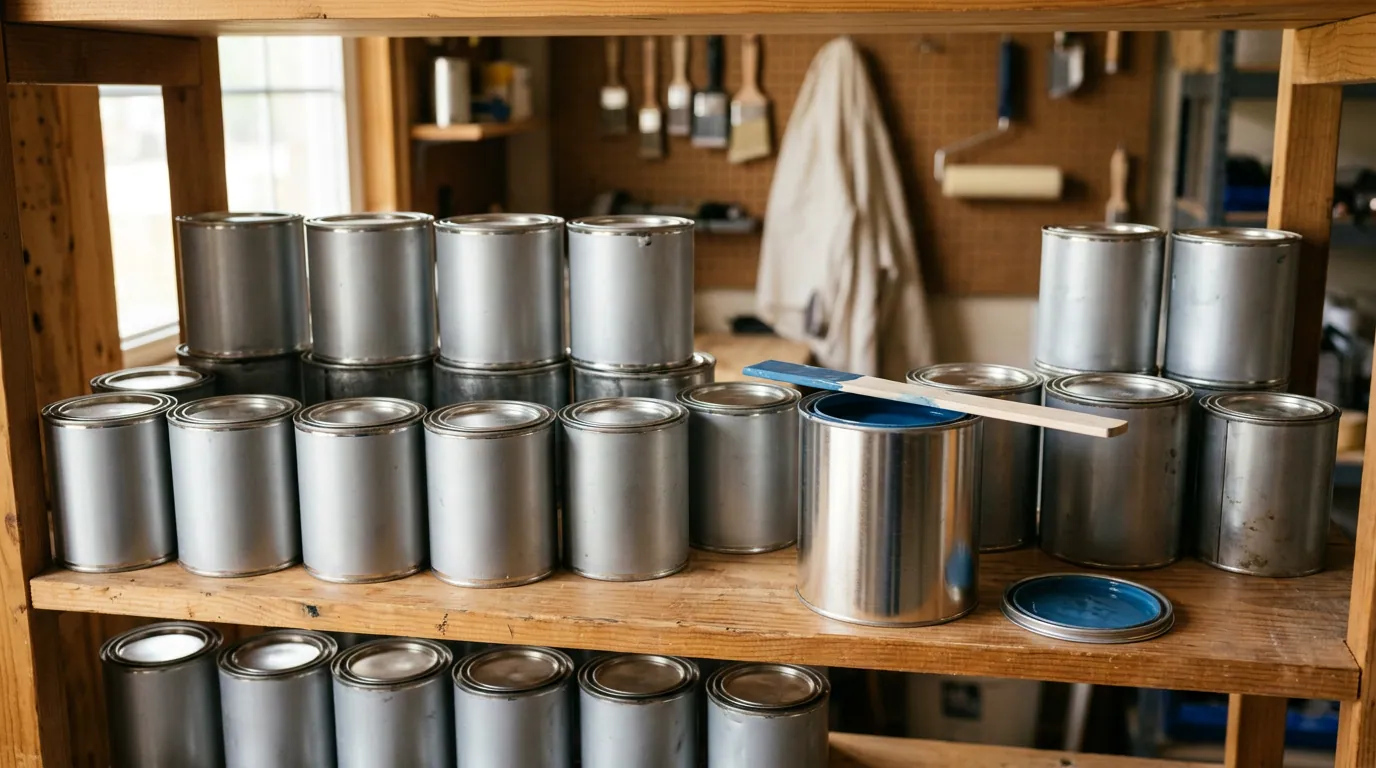
That $1,260 material line is your main lever. A premium gallon can cost three times a value-tier one, but the real math isn't on the shelf tag. It's in how many coats you need.
Value, Core, and Premium Pricing
Value-tier and private-label latex runs $15 to $25 per gallon at retail. National-brand core-tier paint occupies the $30 to $45 range, and that core shelf is where I watch most folks get talked one way or the other. Premium-tier paint runs $50 to $65, and IndexBox's 2026 market data shows super-premium or specialty formulas topping $70 and reaching $90 or more. The trade-up trend is real this year; buyers increasingly pay up for durability, coverage, and health attributes. That choice moves your materials budget from the low hundreds to over a thousand for a full home repaint.
| Tier | Price Range (per gallon) | Key Attributes |
|---|---|---|
| Value / Private Label | $15-$25 | Basic coverage, may require more coats |
| Core / National Brand | $30-$45 | Good hide, standard durability, wide color selection |
| Premium / Super-Premium | $50-$90+ | Excellent hide, advanced durability, low/no VOC, specialty finishes |
Forget the sticker. Cost per finished coat is the real number. A premium acrylic that covers new drywall in two clean coats beats a value-tier flat that flashes over the patched seams and needs a third pass. A $70 premium gallon that covers in two coats often beats a $25 gallon that needs three, once you count the extra labor day.
Why Coverage Beats Sticker Price
The comparison that matters is square footage covered per coat, not the price on the jug. For a 12x12 room, better hide can cut you from three coats to two. That saves a full gallon of paint and hours of labor. Don't pay for a feature you won't use, but don't cheap out on the one that cuts your work in half.
Prep, Lead Safety, and the Hidden Cost Drivers
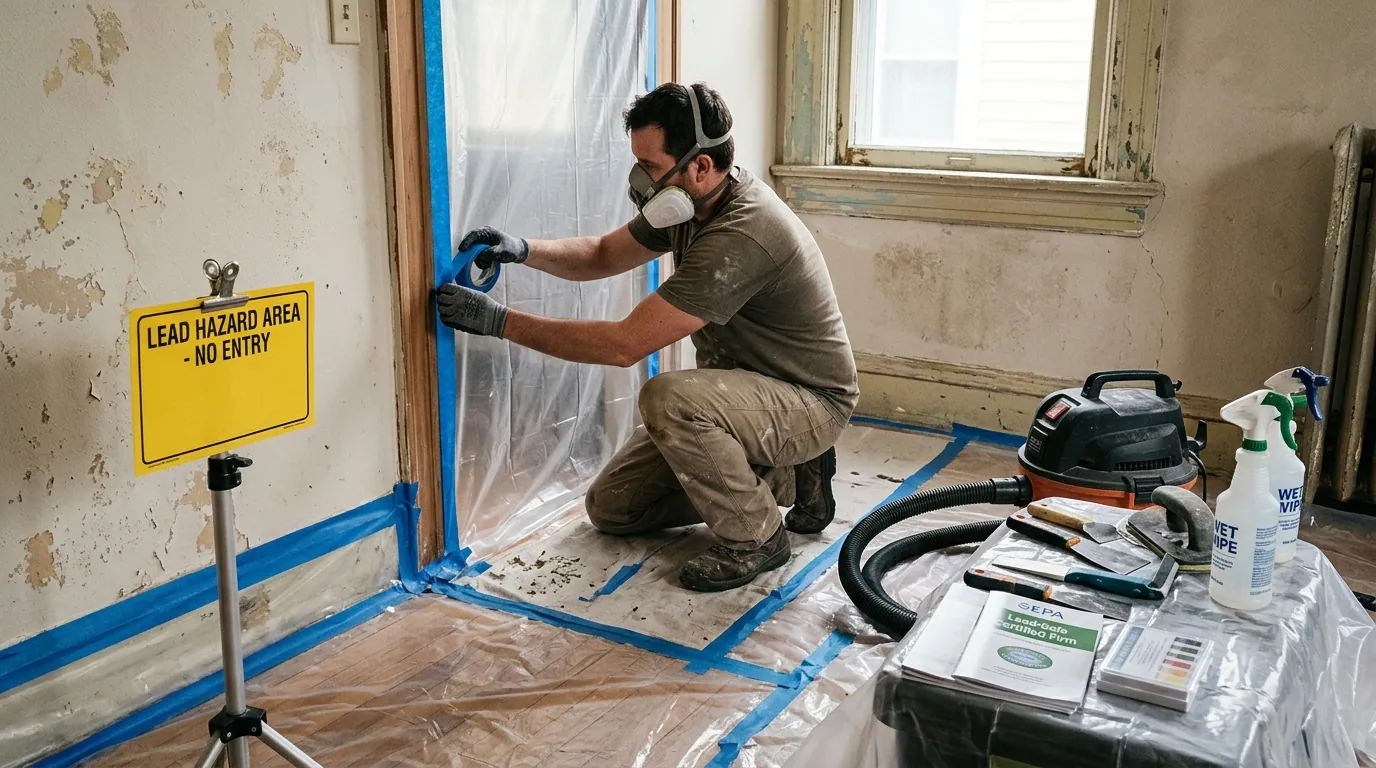
Most bids never mention the federal rule that kicks in on pre-1978 homes, and the containment work behind it can add 20 to 30 percent to a routine quote.
The Pre-1978 Lead Rule Most Bids Ignore
The CDC states there is no safe blood lead level in children, so disturbing old paint isn't just a cosmetic issue. For any home, child-occupied facility, or apartment built before 1978, the EPA's Renovation, Repair and Painting (RRP) rule kicks in the moment you sand, scrape, or cut painted surfaces. It requires certified contractors, specialized training, and containment practices that add real labor hours. A full containment setup means poly sheeting on every surface, HEPA vacuums, taped-off doorways, and bagging the waste at day's end. That work alone can eat the better part of a worker-day before a brush touches the wall. I've watched quotes jump 20 to 30% for an older home just for that protocol. That's the hidden driver behind why two identical-size rooms can quote hundreds of dollars apart. The rule exists because the health stakes are real, and cutting corners here is illegal, not just unethical. You can review the full requirements at the EPA.
Cure Time and Substrate Surprises
New plaster or masonry must cure for 30 days before painting, according to Benjamin Moore's product guidance, which can stall a project timeline unexpectedly. Heavy patching, skim-coating, or fixing water damage adds crew hours that a simple per-square-foot estimate won't capture. I always tell people to budget for prep labor as its own line item. And there's a small carve-out in the rules: "EPA's minor-maintenance exception is six square feet or less of interior painted surface or 20 square feet or less outside, unless prohibited practices, window replacement, or demolition are involved." That exception, detailed by the EPA, is where the costly containment requirements stop, but for any real renovation, assume the full RRP protocol applies.
Does Low-VOC Paint Cost More?
For standard interior work, low-VOC formulations are now the baseline at most price tiers, so they rarely add a separate surcharge. The cost gap shows up only at the far end: specialty zero-VOC and new bio-based lines command premium-tier dollars. What you can even buy depends on where you live.
VOC Limits and the California Divergence
There is no single federal VOC standard for architectural paints. California's limits are far stricter than the EPA's, which means the same brand can ship two different specs. Interior latex sold in California must meet 50 g/L for flat and 100 g/L for non-flat finishes, against national EPA limits of 250 and 380 g/L. This forces manufacturers to reformulate for that market, and those compliant products often become the national standard. The reformulated 50 g/L versions behave differently in the can: slower to level and quicker to set, so a crew keeps a wetter edge to dodge lap marks.
Bio-Based Paint Enters the Market
The newest cost factor is bio-based content, with the latest all-acrylic latex lines now carrying over 20% bio-based carbon. A bio-based zero-VOC line can run close to $80 a gallon, against roughly $48 for the same brand's standard premium two years ago. In the trade, anything from 50 to 250 grams per liter still counts as a VOC paint, while zero-VOC sits below 5 grams per liter. That zero-VOC claim, combined with bio-based feedstocks, lands these paints at the same premium tier covered earlier. The material bump is real but not a dealbreaker for a high-end finish. Just know you're buying into a different shelf entirely, not nudging your usual paint up a few dollars. Always check your local regulations, as they dictate the floor for what's even on the shelf. To see how material choices play out against outdoor work, see our interior vs exterior painting cost guide.
Interior Painting Cost by Project Scope: Room to Whole House
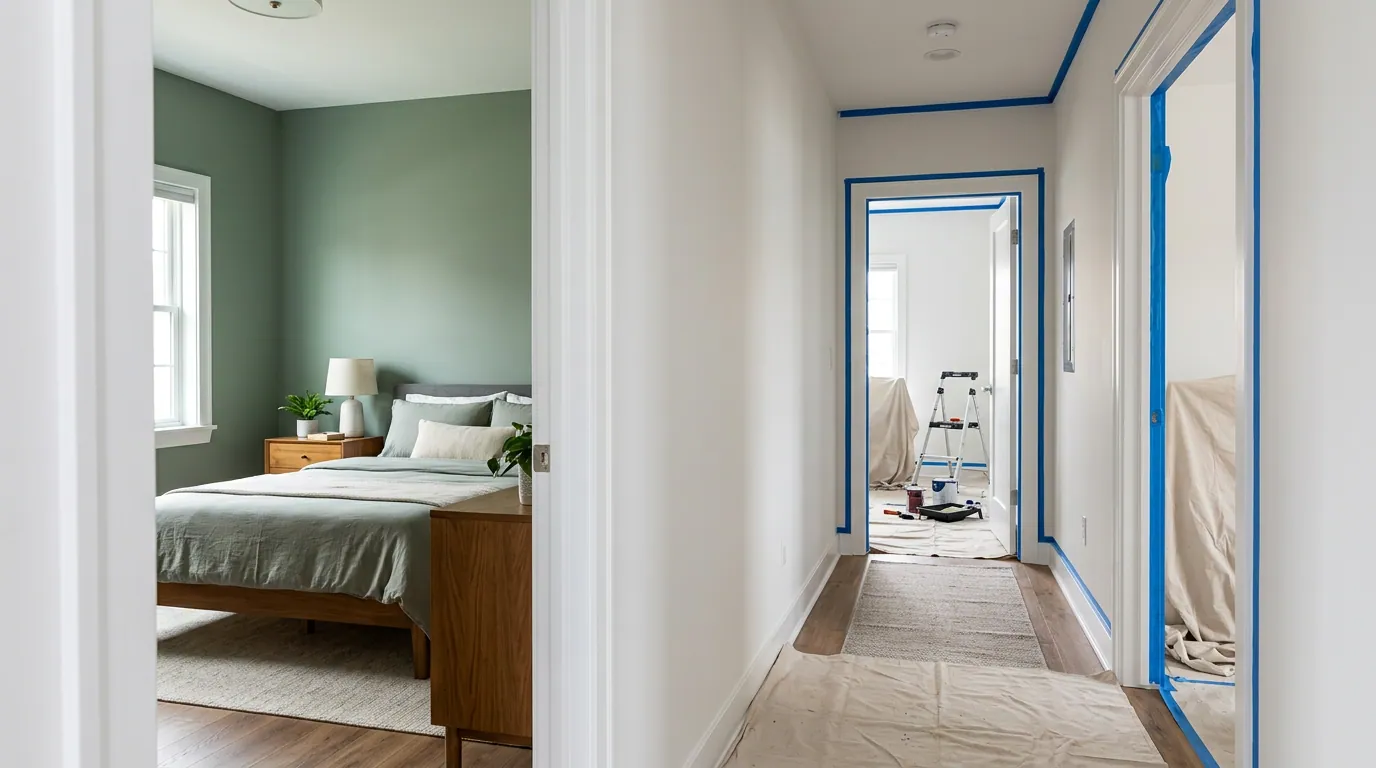
The per-room price drops as you paint more of the house, because the crew's setup costs (travel, taping off, cleanup) get divided across more work. Bundling rooms into a single job is the most effective way to lower your cost per square foot.
Single Room, Full Interior, Whole House
A single-room scope runs a little over $500 in our index, call it $464 to $618, which still tracks with the $400 to $1,200 most jobs hit in 2026. A full interior lands at $5,046, near the middle of the $3,000 to $8,000 band published elsewhere, and the walls-only partial refresh between those two scopes prices at $1,051.
Line Items: Trim, Doors, and Windows
Add-on scopes ride on top of a base room job. Trim and baseboard painting averages around $1,375, roughly $419 to $558, and door painting runs lower, in the $239 to $317 range. These are discrete line items that break out of, or supplement, a full-room quote. On an older home, the detailed prep on trim alone can push these line items up sharply. Cutting in trim is also slower work than rolling a wall: a roller covers a wall in long passes, while a brush line along a baseboard demands a steady hand and several feet a minute at best. All labor in these figures is computed at $26.64 per hour, based on BLS OES data for painters (May 2025 release). When you're reviewing a bid, check how these items are listed. They should be separate, not buried in a lump sum.
| Project Scope | National Average Cost | Typical Range | Key Cost Driver |
|---|---|---|---|
| Single Room | $832 | $464-$618 | Travel and setup spread thin |
| Partial Interior (walls only, 1-2 rooms) | $1,051 | $2,393-$3,166 | Wall area, light prep |
| Full Interior (2,500 sq ft) | $5,046 | $4,618-$6,109 | Surface area, room count |
| Trim & Baseboard | $1,375 | $419-$558 | Linear footage, detail work |
| Door Painting | $261 | $239-$317 | Number of doors, prep needs |
The jump that catches people off guard is single-room to full-interior. Setup and prep don't scale down room by room, so the first room you add always costs more than the last.
Field Notes: Reading a Real Interior Quote Line by Line
Take a quote for repainting a 1,500-square-foot first floor in Evanston, with Benjamin Moore Regal Select Eggshell on the spec sheet, and read it the way I'd walk a client through it, line by line.
A Chicago Repaint, Benjamin Moore Regal Select
The quote starts with a materials list. That particular product's technical data sheet lists 400 to 450 square feet per gallon. For 1,500 square feet of wall and ceiling, you need roughly four gallons for the first coat, factoring in waste and cut-in. The 1 to 2 hour recoat window at 77°F means a crew can realistically apply two coats in a day if prep is minimal. The material line item is straightforward: four gallons at a premium price. Labor comes next, calculated per room. A crew's day rate, based on tracked production rates for similar jobs, covers the two coats and standard prep. Overhead lands last as its own short line, covering insurance, the truck, and gas.
Minimum Charges and Margin Math
The contractor's margin isn't a separate fee; it's built into every number. A job like this breaks down roughly along the materials, labor, and overhead split covered earlier. The contractor then applies a 20% to 40% profit margin to that total cost, as Housecall Pro's 2026 guide notes. For a small job, say just one room, they'll invoke a minimum charge, often $250 to $500.
This is also where estimates blow up. A $2,600 quote that closed out north of $4,400: that was a 1920s two-flat I read for a neighbor a few years back, where the bid looked clean until somebody pulled the old tub surround. Behind it sat a stretch of bathroom wall whose plaster had been wet for decades, and you can't seal paint over crumbling plaster and expect it to hold. The skim-coating and a week of dry time did the rest. The lesson I drill into clients now is that on any pre-1978 wet wall, you don't have a real number until somebody's opened it up.
For that Evanston scope, a first-floor-only repaint, our index pegs partial interior work in the Chicago metro at $3,003 on average, with most quotes falling between $2,823 and $3,742. A clean quote shows you three things on the page: the painter's time, their overhead coverage, and their profit. If all three are there and the total sits inside that band, you're looking at a fair number.
Frequently Asked Questions
How much does interior painting cost? A full interior repaint lands near the national figure detailed above, give or take your scope. What actually moves your number is room count, prep needs, and your local labor market, which on its own swings the total by several hundred dollars from one metro to the next.
How long does it take to paint a home interior?
A single room is often a one-day job. A full interior repaint for a 1,500 to 2,000 square foot home typically takes a small crew three to five working days once you account for prep, two coats, and dry time. Heavy patching extends that timeline. The scope details in the house painting cost guide break this down further.
Can I lower my interior painting cost by doing the prep myself?
Yes. Prep consumes a big chunk of the crew hours you pay for, so the work you take off their plate comes straight off the labor side. Moving furniture, light sanding, and filling small holes can trim the cost. But if your home was built before 1978, leave lead-safe work to certified pros. That's a legal requirement, not a DIY task. Our how to paint a room guide covers safe prep steps.
Why do two contractor quotes for the same room differ so much?
Because estimating isn't a fixed formula; it's custom to each crew's productivity, overhead, and profit margin. I always ask bidders to itemize coats, prep hours, and paint brand. That way you're comparing apples to apples, not just bottom-line numbers that might hide shortcuts.
Does paint sheen change the price?
The gallon costs about the same up and down a product line. The labor is where it bites. Higher-sheen finishes like semi-gloss throw light across every dent and patch line, so a wall I'd roll once in eggshell needs another half-day of sanding and spot-priming before semi-gloss looks right. Flat and eggshell forgive a rougher wall, which keeps the prep light and the cost down.
When should you repaint interior walls?
Bedrooms and ceilings I've painted in a quality eggshell still look fine at the eight or ten year mark. Kitchens, hallways, and any room with kids come up far sooner, often four or five years, because the scrubbing that keeps them clean wears the finish down. Spending up for a premium-tier paint in those high-traffic rooms is usually the cheaper move once you spread it over the years it buys you.
What is the minimum a painter will charge for a small job?
Minimum charges typically run $250 to $500. Bundling several small touch-ups into one visit usually beats paying separate minimums on multiple trips, as I explain in our room painting cost guide.