Is your plumbing bid fair?
How to Fix a Running Toilet: 2026 Parts and Steps
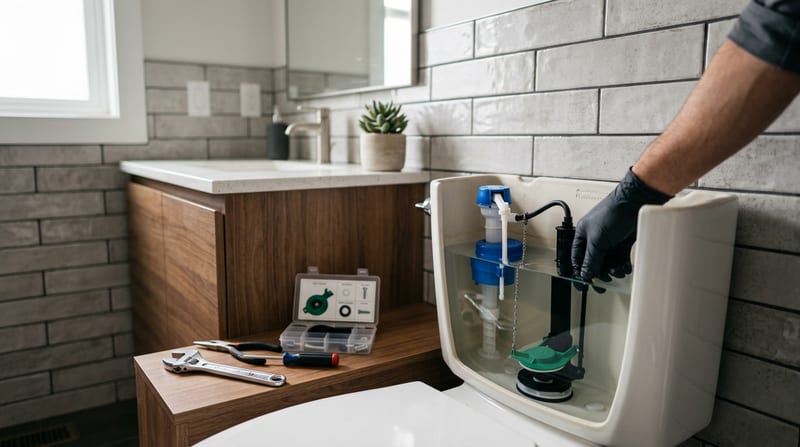
A running toilet wastes water every hour you let it go. I've walked into plenty of homes where the tank kept refilling because nobody bothered to check the obvious first. Fix it right and you avoid both the waste and the call to a plumber.
How to spot a running toilet fast (and avoid the wrong part)
If the tank refills on its own between flushes, you have a leak inside. According to the U.S. Environmental Protection Agency, a leaky toilet can waste about 200 gallons of water every day. That adds up before you even notice the sound. These cost figures draw on EPA WaterSense data, Bureau of Labor Statistics records, and manufacturer technical bulletins from Fluidmaster and Korky, verified as of May 2026.
The 30 second check: water moving between flushes
Listen for the fill valve kicking on when nobody flushed. Korky notes that water is constantly leaking from the tank into the bowl in these cases. Stand still for half a minute. If the water level drops and the valve opens again, the seal is failing somewhere.
The leak test that tells tank leak vs flapper problem
Mark the water line on the tank. Shut the supply valve and wait. If the level drops below your mark, the leak's inside the tank. That's it, no guessing, no buying the wrong part.
Pick the right side to start: fill valve vs flapper
Fluidmaster tells homeowners to find out if you have a fill valve issue or a flapper/flush valve issue right away. The problem's usually a worn flapper or a faulty fill valve, and the swap takes 20 to 45 minutes. Do it yourself and you skip the service call. Not bad.
To fix it, start with a flapper check (most runs are simple)
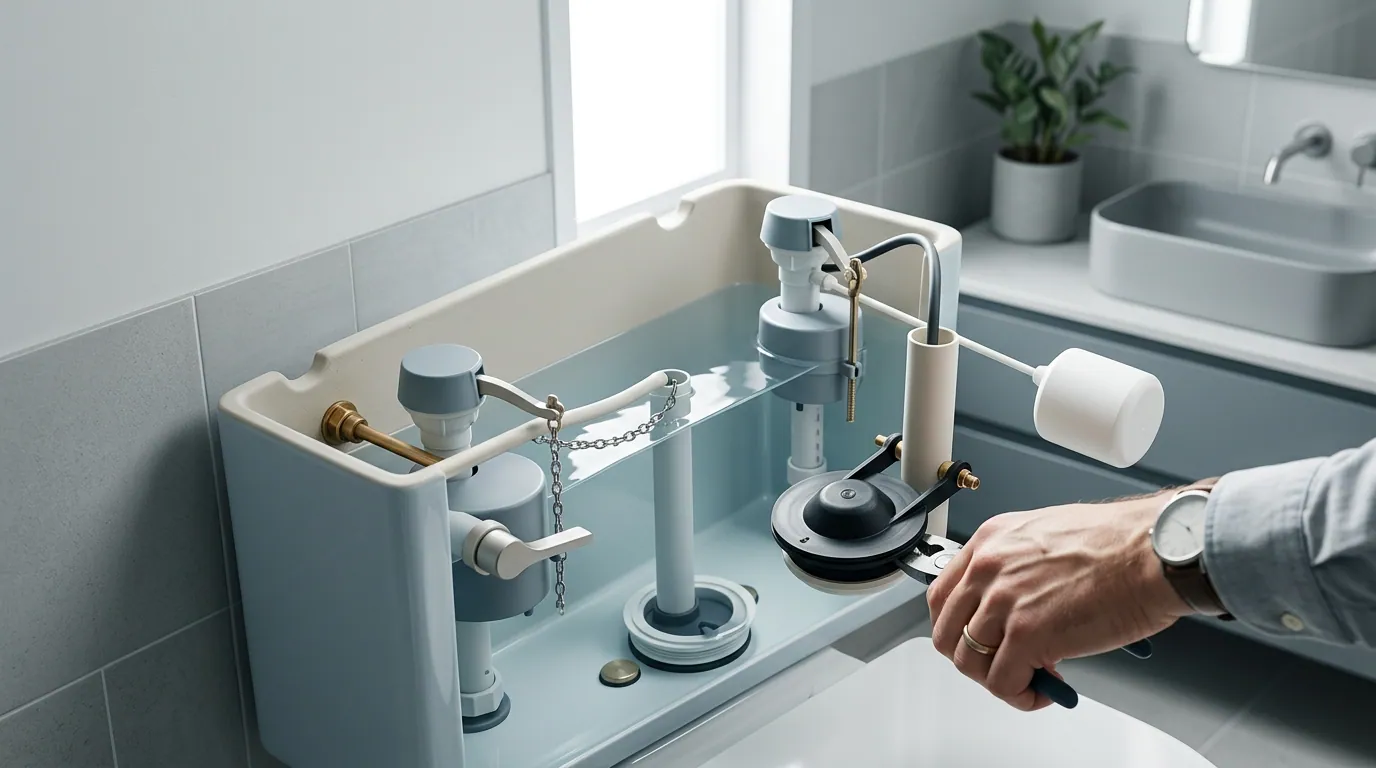
The U.S. Environmental Protection Agency points homeowners to the flapper first, and so do I. Start here before you touch anything else, because it is the cheapest part to rule out.
Why flappers cause running: the seal breaks, then keeps leaking
Once you know it is a tank leak, the flapper is where to look. It sits on the flush valve and should seal tight after every flush. When it warps or the chain gets too tight, water sneaks past. A flapper that's gone bad feels stiff instead of supple, the rubber curls at the lip and won't lie flat on the seat. Run a finger around the rim and you'll feel the warp, sometimes a slimy mineral film that breaks the seal. Fluidmaster says flappers are the leading cause of leaking or running toilets. In my thirty years running build crews, I've seen more callbacks over a two-dollar flapper than over anything else in a bathroom remodel.
Match your flapper size and valve type before you buy
Korky says homeowners should check whether their toilet uses a 2-inch or 3-inch flapper and whether it has a tower-style flush valve. Generic parts do not fit every toilet the same way. Measure the opening or pull the old flapper and take it to the supply house. The Korky 2X and the Fluidmaster 501 cover most 2-inch tanks. Wrong size means you fix it twice.
To fix it: how to replace the flapper and stop the constant refill
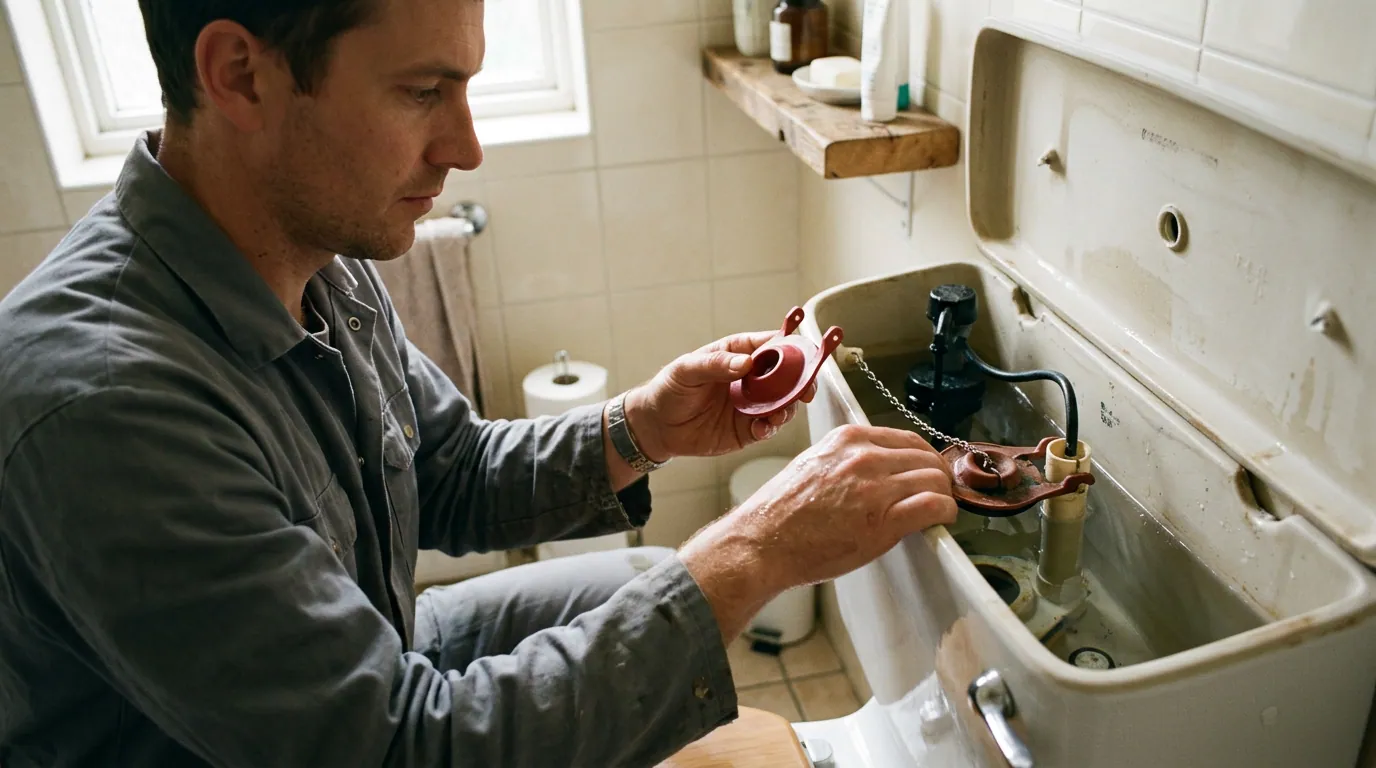
EPA says toilets are often the culprit in household leaks and points homeowners first to the flapper, calling it inexpensive and quick to replace. Kohler says some always-running toilets are solved by a new flapper in about 10 minutes. That's it.
Step by step: shutoff, remove, replace, and set the chain length
Turn off the water supply at the valve behind the toilet. Flush to empty the tank. Unhook the chain from the old flapper and lift it off the posts. Set the new flapper in place, attach the chain with a little slack, and turn the water back on.
Run the short confirmation test before you put everything back
Flush once and watch the tank. The water should stop at the fill line and stay there. If it keeps running, adjust the chain length by one link and test again. Do this before you replace the lid, and before you take any one brand's word on which part to buy.
Running after the flapper fix? Diagnose the fill valve side
What happens when the new flapper sits right and the toilet still runs? You move to the fill valve. Korky defines a running toilet as water leaking from the tank into the bowl between flushes. That leak trips the fill valve to keep turning on and refilling. Fluidmaster puts it plain. Find out if you have a fill valve issue or a flapper flush valve issue.
Fill valve symptoms: phantom refill and steady "listen for flow" noise
Listen at the tank after a flush. A steady hiss that never quits points to a worn valve seal. A cycle where the valve kicks on every few minutes on its own usually means the float arm is sticking or set too high. Either way the water level climbs past the mark, overflows the overflow tube, and runs into the bowl. Per New York City Department of Environmental Protection data, an open fill valve can waste 3 to 5 gallons per minute. That adds up fast.
When the fill valve won't hold: what to replace and why
The seal inside the fill valve wears out or the float arm sticks. Either way the valve stays open. Swap the whole fill valve. The Fluidmaster 400AH drops in with basic tools and runs under twenty dollars at most supply houses. Match the height and the connection at the bottom. Turn the water back on and test. If the noise stops and the level holds, you are done.
How much does it cost to fix a running toilet in 2026? (DIY vs plumber)
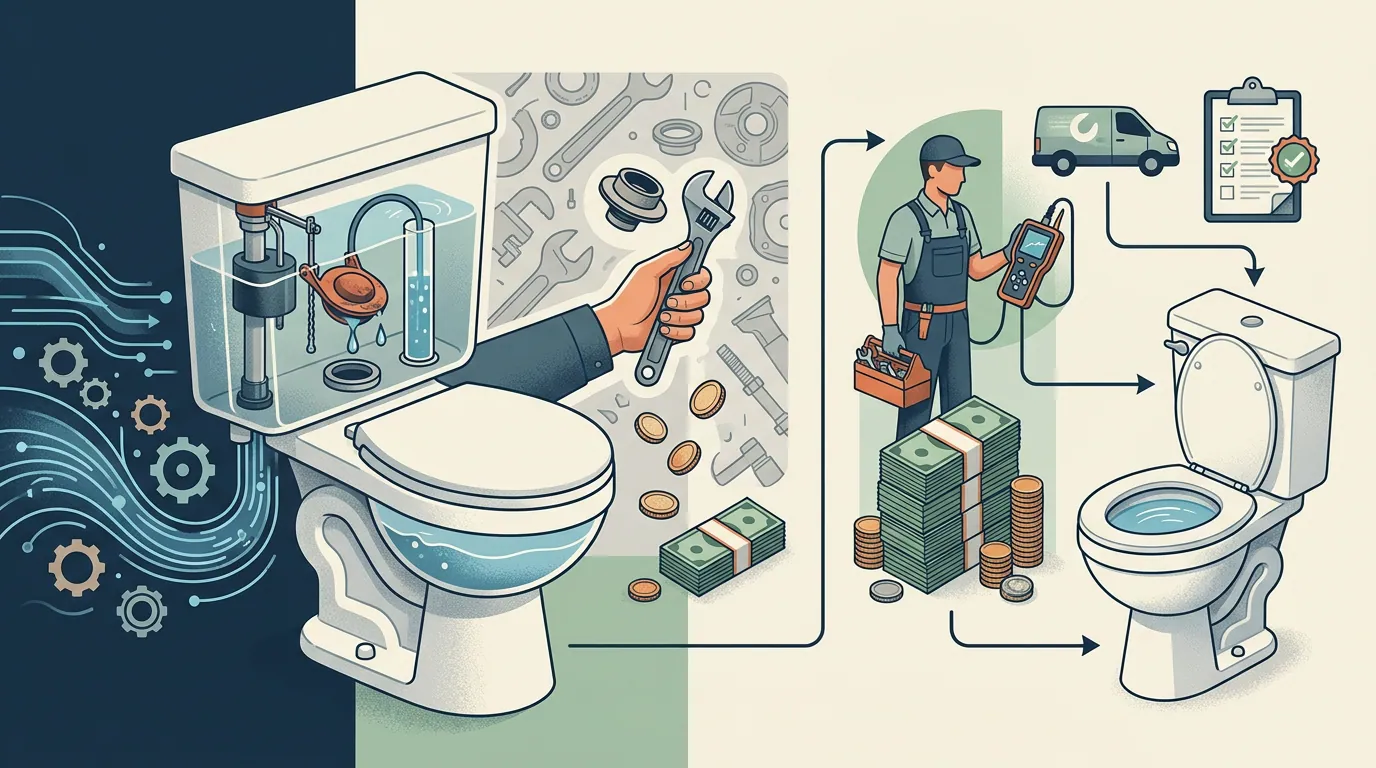
A plumber's hourly rate runs $75 to $200 in most metros, usually with a first-hour minimum, and our cost index puts the average plumbing repair visit at $303. Most of that is the trip and the labor, not the part. That gap is the whole case for doing this one yourself.
Price ranges that match the real parts: flapper vs fill valve
A flapper runs five to fifteen dollars. A fill valve runs ten to twenty five. Add a couple bucks for a new chain or seal kit if needed. Those numbers come straight from retail shelves. It's under thirty dollars when you handle it yourself. That's the whole budget.
Installed cost check: the labor you're actually paying for
The plumber shows up, shuts the water, swaps the part, and tests. That labor makes up most of the bill. You pay for the trip and the time, and one stuck valve does not cost more to swap than a worn flapper does.
DIY vs plumber decision table you can use during the call
| Option | Upfront cost | Time | Risk | Best when |
|---|---|---|---|---|
| DIY parts only | Under $30 | 30 minutes | Low if you match sizes | You've got basic tools and the leak's simple |
| Plumber visit | $266 to $344 ($303 index average) | Same day | None | The valve's stuck or you want it done right now |
Call a plumber when the valve's stuck or you want it done today. Otherwise the parts swap is yours.
Avoid replacement traps: parts matching and when to call a pro
Do not buy a whole new toilet when a twenty dollar part will stop the run. Get the sizes right first.
Order the right spec: flapper size, fill valve compatibility, and chain setup
Take the old flapper to the supply house. Standard toilets use a two inch flapper. Larger ones take three inch. The fill valve must match the tank height and the supply line thread. Leave a little slack in the chain so the flapper seats flat. Get the fit wrong and you're doing the job twice. Call a pro only after the parts swap fails twice or the tank itself cracks.
Sources
Water-use and fixture data: EPA WaterSense, https://www.epa.gov/watersense. Labor and wage inputs: Bureau of Labor Statistics Occupational Employment and Wage Statistics, https://www.bls.gov/oes/. Full FatBook methodology: https://thefatbook.com/plumbing/methodology/.